Applied Materials Slit Valve Door: A Working Guide For Replacement And Qualification
Release time:2026-12-21
Visits:12
When an Applied
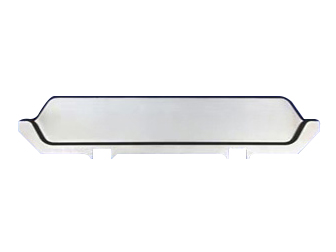
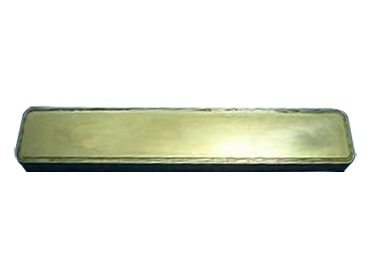
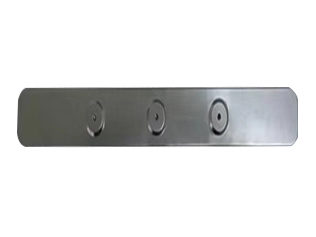
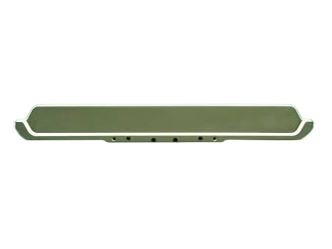
Materials slit valve door is replaced on a running tool, the part that comes off is almost always still a door — a stainless plate with a seal face, an insert, sometimes a coating, sometimes a hinge. It just no longer seals at the specification the chamber needs.
The replacement decision is usually triggered by one of three events: a rate-of-rise test that fails on a scheduled check, a particle excursion that traces back to the transfer chamber, or a visible wear pattern found during preventive maintenance. Sorting out which event you are in determines whether a new door is the right answer or an expensive way to postpone a different problem.
Wuxi Hitron Semiconductor Co., Ltd. supplies slit valve doors and valve components against OEM part references for thin-film and etch platforms, along with FFKM seals, electrostatic chuck hardware and vacuum valve replacements. This guide collects what our engineers check before shipping an Applied Materials slit valve door and what we recommend a fab verify on receipt.
The Door Is Usually the Wear Part
On most transfer valves, the body, the actuator and the gate mechanism are designed for the life of the tool. The door is not. It faces the process chamber side, sees radical and ion flux at the aperture edge, carries the seal that takes compression set, and absorbs every misalignment in the mechanism.
Three consequences follow, and they shape how a replacement should be specified:
- The door geometry must match the original, because the mechanism has no adjustment left after years of service.
- The seal face and insert are the functional surfaces; a door with the right outline and the wrong insert height will leak.
- Coating choice is process-dependent. A door that works on a thin-film platform may erode quickly in a chlorine etch.
Anatomy of the Door
|
Feature |
Function |
What fails in service |
|
Door body |
Structural plate; carries the seal land |
Warpage, bolt-hole elongation, edge erosion |
|
Seal land |
Flat face that compresses the insert |
Loss of flatness; coating wear; scratches from handling |
|
Insert / seal element |
Provides the vacuum seal |
Compression set, plasma erosion, cuts and nicks |
|
Insert retention |
Holds the element in the groove or pocket |
Loosening under thermal cycling; insert creep |
|
Coating (where applied) |
Corrosion and plasma resistance on the process-facing side |
Localized erosion near the aperture, especially at corners |
|
Mounting / pivot interface |
Locates the door to the gate mechanism |
Wear, play, misalignment, seized hardware |
|
Purge or vent ports (where present) |
Local purge at the aperture |
Blocked orifices; damaged fittings |
The insert is a consumable and should be treated as one. The body and coating are wear parts with a much longer interval — but only if handling is right. A door dropped on a bench corner has lost its flatness in a way no leak test will attribute correctly.
Part Numbers by Platform
The numbers below are the references we most often receive for Applied
Materials slit valve door replacement. They are given as OEM references for cross-checking; the platform and process label should always be confirmed against the tool's own documentation before ordering.
|
OEM part reference |
Platform / position |
Process label |
Notes |
|
3870-00661 (8575) |
Applied Materials Producer |
TF (thin film) |
Door assembly commonly replaced on CVD-type transfer valves |
|
3870-04001 (G67P) |
Applied Materials Producer |
ETCH |
Etch-side door; coating and insert selection matter more here |
|
0190-02853 |
P5000 knife valve |
TF |
Knife-style gate; check stroke and land width |
|
0020-10202 |
P5000 base position |
TF |
Base door reference; verify interface before substitution |
|
00-1020202 |
P5000 tablet position |
TF |
Tablet-position reference; confirm revision level |
|
77006-R1 / 78510-R1 |
Novellus / Speed, STS |
TF |
Included for cross-platform reference only |
Two rules about part numbers:
1. A part number is not a specification. Two doors can carry the same reference and differ in insert compound, insert height and coating. Ask what is on the door, not only what is stamped on the bag.
2. Revision suffixes matter. A "-R1" or letter suffix often encodes a geometry or coating change. Fit the revision the tool was built with unless an engineering change explicitly supersedes it.
Coating and Surface Finish
The process-facing side of an Applied Materials slit valve door usually carries a coating whose job is to survive chemistry that would eat bare aluminium. What to confirm:
- Coating type and thickness. Anodized aluminium, alumina and yttria-based coatings behave very differently in fluorine and chlorine service. The right answer depends on the chamber, not on availability.
- Coverage at the aperture edge. This is where flux concentrates. A coating that stops short of the edge leaves a bare ring that erodes first and generates particles.
- Surface roughness on the seal land. Roughly 0.4–0.8 µm Ra is a practical target for an elastomer insert. Rougher leaks; excessively smooth can promote stiction and tearing during opening.
- Flatness. Check the land with a straight edge or a flatness gauge across the full length. A door that is flat in the middle and low at the ends will compress the insert unevenly and leak at one corner.
Fit Checks Before Installation
Most "bad door" complaints we investigate turn out to be an installation issue. Verify these in order:
|
Check |
Method |
What good looks like |
|
Land flatness |
Straight edge plus feeler gauge, or surface plate |
Within the drawing tolerance across the full sealing length |
|
Insert height |
Depth micrometer or height gauge against the drawing |
Insert sits proud by the specified amount, uniform around the perimeter |
|
Insert seating |
Visual and light finger pressure |
No gap, no twist, no trapped debris under the insert |
|
Bolt hole alignment |
Trial fit without force |
Fasteners start by hand; no elongation marks |
|
Door travel and stroke |
Cycle the mechanism dry, watch contact |
Door lands flat, no rocking, compression stroke repeatable |
|
Torque |
Calibrated torque wrench to the tool specification |
Even clamp load; no thread damage |
|
Leak-up |
Isolate, evacuate, isolate again, record rate of rise |
Meets the tool's acceptance value, stable over the hold time |
Do not skip the dry cycle. A door that rocks on contact will pass a static leak test and fail after 500 cycles.
Leak-Up Test and Acceptance
A leak-up test is the only functional acceptance test that matters for a slit valve door. Procedure we recommend:
1. Pump the isolated volume to base pressure and confirm with a gauge that has adequate resolution at that decade.
2. Isolate the volume, close the door, and record pressure at t = 0.
3. Hold for a defined interval — usually 5 to 30 minutes depending on volume — and record final pressure.
4. Compare the rate of rise against the tool specification, and against the same test run before the door was changed.
A door that passes on rate of rise but fails on particle count is not a sealing problem. Look at coating wear at the aperture edge and at the purge path before replacing the door again.
The Counterfeit Question
Applied Materials slit valve doors are expensive, highly referenced parts, which makes the aftermarket attractive to suppliers who copy the outline and not the function. What to ask any supplier, including us:
- Is the insert compound identified on the documentation, with a cure date?
- Is the coating type stated, with thickness and coverage defined?
- Is flatness measured and recorded, or assumed from the machining process?
- Is there a traceable lot or serial reference for the door?
If a supplier cannot answer the first and last questions, the price difference is being paid somewhere in the chamber.
Why Hitron Supplies These Doors
Wuxi Hitron Semiconductor Co., Ltd. is a Wuxi-based manufacturer of semiconductor front-end equipment components, with a 3,000 m² workshop, more than 100 client companies served and a component range that runs from FFKM seals and slit valve doors to ESC hardware, wafer transfer components and vacuum valves.
For an Applied Materials slit valve door, that translates into:
- Geometry matched to OEM references across Producer, P5000 and related platforms, including the 3870-00661 (8575), 3870-04001 (G67P), 0190-02853 and 0020-10202 references.
- Insert and coating options selected against the actual process chemistry rather than against a generic catalogue.
- Documentation covering compound, cure date, lot traceability and dimensional conformance.
- Rapid supply from a stocked spare-parts inventory, because a slit valve door is a downtime item, not a scheduled project.
Send the OEM part number, the platform, the process chemistry and the tool's leak specification. We will confirm the correct door configuration and the insert choice, and tell you if the failure you are seeing is more likely to be a stroke or alignment problem than a door problem.
Contact: Jerry@hitronsemi.com · +86 18101522032 · Wuxi, Jiangsu, China