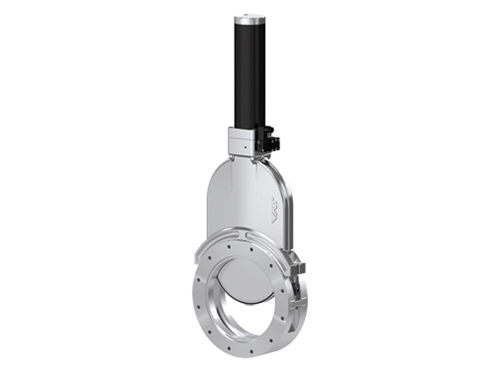
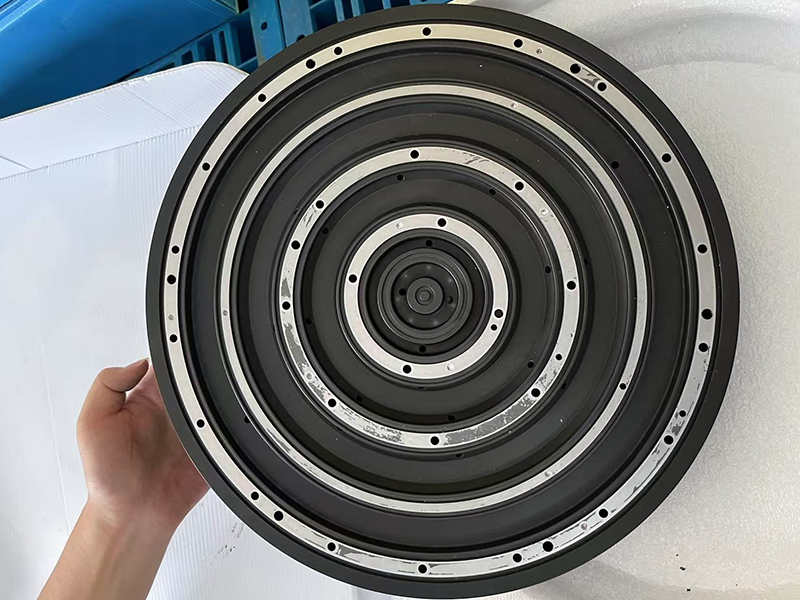
What Is a VAT Vacuum Valve?
A VAT vacuum valve is a high-performance isolation valve used in semiconductor vacuum systems to isolate chambers, control gas flow, and vent / pump process modules, with the term "VAT" referring to the vacuum-valve product line originally developed by VAT Inc. (Haag, Switzerland) and now broadly used to describe compatible valves from other manufacturers. VAT valves are designed for ultra-high vacuum (UHV), high cycle life, and minimal particle generation.
Typical VAT vacuum valve applications:
Load lock isolation (vent / pump).
Transfer chamber isolation.
Process module isolation.
Foreline isolation (roughing, foreline).
Gas line isolation (process gas, purge).
Cryopump isolation.
Turbo pump isolation.
VAT valves are differentiated from slit valve doors by their circular sealing geometry and broader application scope (gas, vacuum, foreline), while slit valve doors are specifically rectangular for wafer transfer.
What Are the Main Valve Types?
The main
VAT vacuum valve types are gate valves (rectangular or circular), angle valves (L-shaped foreline isolation), poppet valves (gas line injection), and pendulum valves (large-bore foreline). Each type has a different flow conductance, footprint, and application fit.
|
Valve type |
Flow path |
Application |
Notes |
|
Gate valve |
Straight-through |
Chamber isolation, foreline |
High conductance, compact |
|
Angle valve |
90° elbow |
Foreline, isolation |
Compact, lower conductance |
|
Poppet valve |
Poppet against seat |
Gas line, fast cycle |
Fast, simple |
|
Pendulum valve |
Pendulum disc |
Large foreline |
High conductance, large DN |
|
Slit valve |
Rectangular |
Wafer transfer |
See Article 02 |
For chamber isolation (transfer chamber to process chamber), gate valves are standard. For foreline isolation (chamber to rough pump), angle valves are standard. For gas line isolation, poppet valves are standard.
How Does a Gate Valve Work?
A gate valve uses a rectangular or circular sealing plate that translates linearly to open or close the flow path, with the plate sealed against an O-ring or metal gasket seat when closed. The actuation is pneumatic (standard) or manual (service).
|
Gate valve feature |
Function |
|
Sealing plate |
Translates to open / close |
|
Bonnet seal |
Seals the actuator side from atmosphere |
|
Bellows (optional) |
Seals the actuator stem for UHV |
|
Position indicator |
Signals open / closed to controller |
|
Solenoid valve |
Controls pneumatic actuation |
|
Limit switch |
Verifies open / closed position |
For production semiconductor tools, bellows-sealed gate valves are standard because they allow actuator-side maintenance without breaking chamber vacuum.
What Are the Key Valve Specifications?
The key VAT vacuum valve specifications are nominal diameter (DN), seal type, cycle life, leak rate, actuation time, and mounting flange. Each specification is matched to the process tool's vacuum, throughput, and cleanliness requirements.
|
Specification |
Standard value |
Notes |
|
Nominal diameter (DN) |
40, 63, 100, 160, 200, 250 mm |
Matched to chamber port |
|
Seal type |
FFKM, FKM, metal |
Determines temp, cycle life |
|
Cycle life |
100,000 (metal) to 1,000,000+ (FFKM) |
Replaced at end-of-life |
|
Leak rate |
< 1×10⁻⁹ std cc/s He (FFKM) |
UHV requirement |
|
Leak rate |
< 1×10⁻¹⁰ std cc/s He (metal) |
UHV / XHV requirement |
|
Actuation time |
< 0.5 to 1 s |
Throughput-dependent |
|
Bellows life |
10,000 to 100,000 cycles |
Critical for UHV |
|
Mounting flange |
CF, ISO-K, ISO-F, custom |
Matched to chamber |
|
Differential pressure |
1 atm (typ.), up to 2 bar |
Process / foreline |
For 300 mm advanced-node production, FFKM-sealed gate valves with 1,000,000+ cycle life are standard for chamber isolation, with metal-sealed valves reserved for high-temperature or low-cycle applications.
What Are the Sealing Options?
VAT vacuum valve sealing options are FFKM (Kalrez) for high-cycle and moderate temperature, FKM (Viton) for lower-cost and lower-cycle, and metal (Cu, Al, Au) for ultra-high temperature and lowest leak rates. Each seal type is matched to the process chemistry and temperature.
|
Seal type |
Temperature |
Cycle life |
Leak rate |
Cost |
|
FFKM (Kalrez) |
Up to +200 °C |
1,000,000+ |
< 1×10⁻⁹ std cc/s He |
High |
|
FKM (Viton) |
Up to +150 °C |
500,000 |
< 1×10⁻⁸ std cc/s He |
Medium |
|
Metal (Cu) |
Up to +450 °C |
100,000 |
< 1×10⁻¹⁰ std cc/s He |
Medium |
|
Metal (Au) |
Up to +450 °C |
10,000 |
< 1×10⁻¹¹ std cc/s He |
High |
For load lock isolation (typ. −50 °C to +150 °C, frequent cycling), FFKM is the standard. For high-temperature process module isolation (typ. up to +400 °C), metal seals are used.
What Is Cycle Life and How Is It Tested?
VAT valve cycle life is tested per SEMI standards (SEMI E12, SEMI E47) with continuous cycling under differential pressure and periodic leak-rate and actuation-force verification, with end-of-life defined as the cycle at which the leak rate exceeds the specification. Production valves are replaced preventively before reaching rated cycle life.
|
Cycle test |
Standard |
Method |
|
Cycle endurance |
SEMI E12 |
Continuous cycling with leak-rate check |
|
Bellows life |
SEMI E12 |
Cycle to bellows failure |
|
Particle test |
SEMI E12 |
Particle count per ISO 14644 |
|
Actuation force |
SEMI E12 |
Force profile over cycles |
For 300 mm production load locks (typ. 100–500 cycles / day), FFKM-sealed gate valves achieve 5–10 year life before preventive replacement.
What Is a Pendulum Valve?
A pendulum valve uses a pendulum-mounted disc that swings open to provide large-bore foreline isolation with high conductance and minimal footprint, with the disc sealing against an O-ring or metal gasket when closed. Pendulum valves are used on large forelines (DN 160–250 mm) where straight-through gate valves are too tall.
|
Feature |
Function |
|
Pendulum disc |
Swings open for high conductance |
|
Pivot mechanism |
Provides reliable rotation |
|
Sealing seat |
O-ring or metal gasket |
|
Bellows |
UHV seal for pivot mechanism |
Pendulum valves are common on cryopump isolation and large chamber pump-down lines. They provide higher conductance than angle valves at the same DN.
What Are the Standard Mounting Interfaces?
Standard VAT vacuum valve mounting interfaces are CF (ConFlat), ISO-K (clamp), ISO-F (bolted), and custom OEM-specific flanges, with the choice driven by the chamber OEM specification and the vacuum level required. All standard interfaces comply with ISO 3669 and ISO 1609.
|
Flange type |
Size |
Standard |
Notes |
|
CF (ConFlat) |
2.75" to 10" |
ISO 3669 |
Copper gasket, UHV |
|
ISO-K |
63 to 250 mm |
ISO 1609 |
Clamp + O-ring, HV |
|
ISO-F |
63 to 250 mm |
ISO 1609 |
Bolted + O-ring, HV |
|
KF (Klein Flansch) |
10 to 50 mm |
ISO 2861 |
Small foreline, quick-clamp |
For load lock and transfer chamber isolation, ISO-K and CF are the standard. For foreline, KF and ISO-K are common.
How Does a VAT Valve Compare to a Slit Valve Door?
VAT circular valves are used for non-wafer isolation (gas, foreline, chamber isolation) while slit valve doors are used for wafer transfer; the two are complementary in a cluster tool. A typical 300 mm cluster tool uses 6–10 slit valve doors (wafer transfer) and 10–20 circular valves (gas, foreline, isolation).
|
Feature |
VAT circular valve |
Slit valve door |
|
Shape |
Circular / rectangular |
Rectangular |
|
Application |
Gas, foreline, isolation |
Wafer transfer |
|
Typical DN |
40–250 mm |
200 × 300 mm (wafer) |
|
Seal |
FFKM, FKM, metal |
FFKM, metal |
|
Cycle life |
100,000 to 1,000,000+ |
1,000,000+ |
|
Actuation |
Pneumatic, manual, electric |
Pneumatic, electric |
For cluster tool design, the combination of slit valve doors (wafer path) and VAT circular valves (gas / foreline) is the standard architecture. Hitron's VAT Vacuum Valve and Slit Valve Door product lines cover both categories.
What Is a VAT Valve Position Indicator?
A VAT valve position indicator is a sensor (mechanical limit switch, magnetic proximity, or optical) that signals the open / closed state of the valve to the tool controller, with the indicator being safety-critical because interlock logic depends on the valve state. Modern VAT valves include both open and closed indicators for redundant verification.
|
Indicator type |
Function |
Notes |
|
Mechanical limit switch |
Direct contact |
Reliable, simple |
|
Magnetic proximity |
Magnet on valve stem |
Non-contact, hermetic |
|
Optical |
LED + photo-detector |
Non-contact, high reliability |
|
Encoder (servo) |
Continuous position |
For servo-actuated valves |
For safety-critical interlocks, two indicators (open and closed) are required per valve. For production tools, all valves are equipped with both indicators.
Frequently Asked Questions
Q: What does "VAT" stand for?
A: VAT is the name of the vacuum-valve manufacturer VAT Inc. (Vakuum-Apparate-Technik), headquartered in Haag, Switzerland. The term "VAT valve" is broadly used to describe compatible valves from other manufacturers following the same interface and performance standards.
Q: What is the difference between a gate valve and an angle valve?
A: A gate valve has a straight-through flow path with high conductance; an angle valve has a 90° elbow flow path with lower conductance but more compact installation. Gate valves are used for chamber isolation; angle valves for foreline isolation.
Q: What is the typical cycle life of a FFKM-sealed VAT valve?
A: 1,000,000+ cycles for chamber-isolation gate valves; 100,000–500,000 for angle valves and poppet valves. Production tools replace valves preventively at 50–80 % of rated cycle life.
Q: Can VAT valves be repaired?
A: Seals (O-rings, bellows) can be replaced in the field. The valve body and actuator are typically replaced as a complete assembly to minimize downtime and avoid re-calibration issues.
Q: What is the leak rate requirement for advanced-node tools?
A: < 1×10⁻¹⁰ std cc/s He for sub-3 nm production. This requires metal seals or premium FFKM with controlled assembly.
Q: What is a bellows-sealed valve?
A: A bellows-sealed valve uses a welded metal bellows to seal the actuator stem from atmosphere, allowing UHV-grade sealing and actuator-side maintenance without breaking chamber vacuum.
Q: Does Hitron offer custom VAT-compatible valves?
A: Yes. Hitron's VAT Vacuum Valve product line includes standard and custom VAT-compatible vacuum valves for OEM and aftermarket applications. Contact the Hitron engineering team for custom requirements.
Q: What is the difference between ISO-K and CF flanges?
A: ISO-K is a clamp + O-ring flange rated for high vacuum (HV, typ. > 10⁻⁸ mbar). CF (ConFlat) is a bolt + copper gasket flange rated for ultra-high vacuum (UHV, typ. > 10⁻¹⁰ mbar). CF is used for UHV applications; ISO-K for HV.
Q: What is the maximum temperature for a FFKM-sealed valve?
A: Up to +200 °C continuous (typ.), with short excursions to +300 °C. For higher temperatures, metal seals are required.
Conclusion
VAT vacuum valves are the workhorse isolation valves for semiconductor vacuum systems, with FFKM sealing for high-cycle chamber isolation and metal sealing for high-temperature or ultra-high-vacuum applications. Selection is driven by valve type (gate, angle, poppet, pendulum), seal material, actuation, and mounting flange. Hitron's VAT Vacuum Valve product line covers the standard VAT-style vacuum valves used in load locks, transfer chambers, and process module isolation, with the Product page listing the full front-end equipment component range and the Application page describing process integration. For product range, certifications, and engineering support, consult the About Us and Contact Us pages.