What Are Plasma Etch Chamber Components?
Plasma etch chamber components are the parts that come into contact with the plasma, the wafer, or the chamber vacuum, and that must survive the aggressive chemistry (F, Cl, Br, O, H radicals and ions) and the energetic ion bombardment of the etch process. Each component must be selected for the specific chemistry and process uptime target.
The four main etch chemistry categories and the components most affected:
|
Etch chemistry |
Gases |
Components most affected |
|
Fluorine (dielectric etch) |
CF₄, CHF₃, SF₆, NF₃ |
Chamber wall (Al₂O₃, Y₂O₃), ESC (Al₂O₃), FFKM seals |
|
Chlorine (metal etch) |
Cl₂, BCl₃, HBr |
Chamber wall (Al, ceramic-coated), ESC (Al₂O₃), FFKM seals |
|
Bromine (silicon etch) |
HBr, Br₂ |
Chamber wall, ESC, FFKM seals |
|
Oxygen (strip / ash) |
O₂, N₂O |
Chamber wall, FFKM seals (high erosion) |
For each chemistry, the component materials must be plasma-resistant, low-particle, and compatible with the temperature range.
What Chamber Materials Are Used?
The standard chamber wall materials for production plasma etch are anodized aluminum (legacy), ceramic Al₂O₃ (advanced), and yttria-coated aluminum (Y₂O₃ / Al, advanced-node). Each material provides a different balance of plasma resistance, particle generation, and cost.
|
Chamber material |
Plasma resistance |
Particle |
Cost |
Application |
|
Anodized Al |
Good (legacy) |
Medium |
Low |
Legacy etch, 200 mm |
|
Al₂O₃ ceramic |
Excellent |
Low |
High |
Advanced etch, 300 mm |
|
Y₂O₃-coated Al |
Excellent |
Very low |
High |
Sub-3 nm etch |
|
Quartz |
Limited |
Low |
Medium |
Some ash / strip |
|
SiC |
Excellent |
Low |
Very high |
High-power etch |
For sub-3 nm production etch, Y₂O₃-coated Al is the standard because it provides the lowest plasma erosion and the lowest particle generation among metal-chamber designs.
What Are the Plasma Erosion Mechanisms?
Plasma erosion in etch chambers occurs through three main mechanisms: chemical etching (radical attack), physical sputtering (ion bombardment), and chemical-assisted ion etching (combined chemical and physical). The dominant mechanism depends on the plasma chemistry and process conditions.
|
Erosion mechanism |
Plasma |
Erosion rate (typ. Al₂O₃) |
|
Chemical etching |
Fluorine (CF₄, SF₆) |
10–100 nm/min |
|
Physical sputtering |
Ar, O₂ high-power |
1–10 nm/min |
|
Chemical-assisted ion |
Cl₂ / BCl₃ + ion bombardment |
50–500 nm/min |
For halogen etch (Cl, Br, F + ions), chemical-assisted ion etching is dominant and produces the highest erosion rates. Y₂O₃ and other rare-earth coatings reduce erosion by forming a stable oxy-halide surface layer.
What Are the FFKM Erosion Rates?
FFKM erosion rates in plasma etch depend on the compound (Kalrez 4079, 6375, etc.), the plasma chemistry (O₂, CF₄, SF₆, Cl₂, HBr), and the plasma conditions (power, pressure, duty cycle), with typical rates of 5–200 nm/min. The erosion determines the FFKM seal lifetime.
|
Plasma chemistry |
FFKM erosion rate |
Notes |
|
O₂ plasma |
20–100 nm/min |
Forms oxide layer |
|
CF₄ plasma |
10–50 nm/min |
Fluorinates surface |
|
SF₆ plasma |
30–80 nm/min |
Sulfur reacts |
|
Cl₂ / HBr plasma |
20–60 nm/min |
Halogen reacts |
|
Ar sputter |
50–200 nm/min |
Physical erosion |
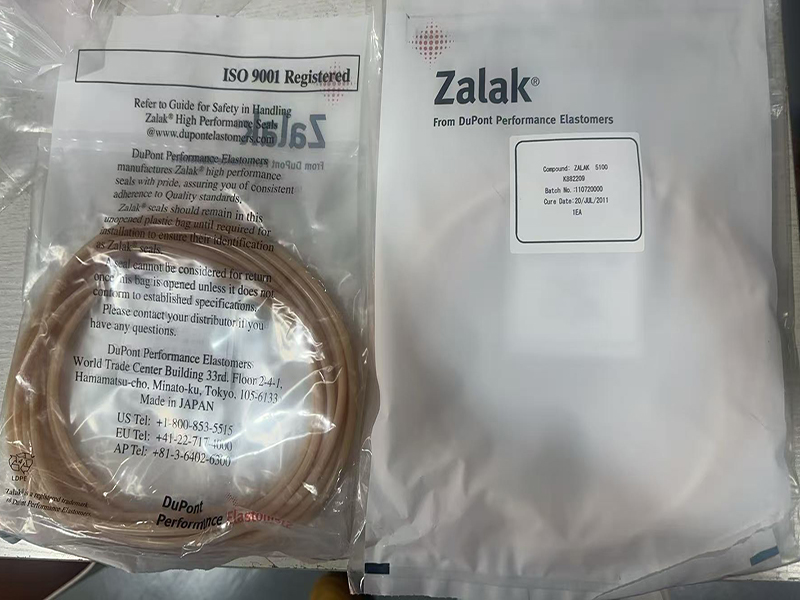
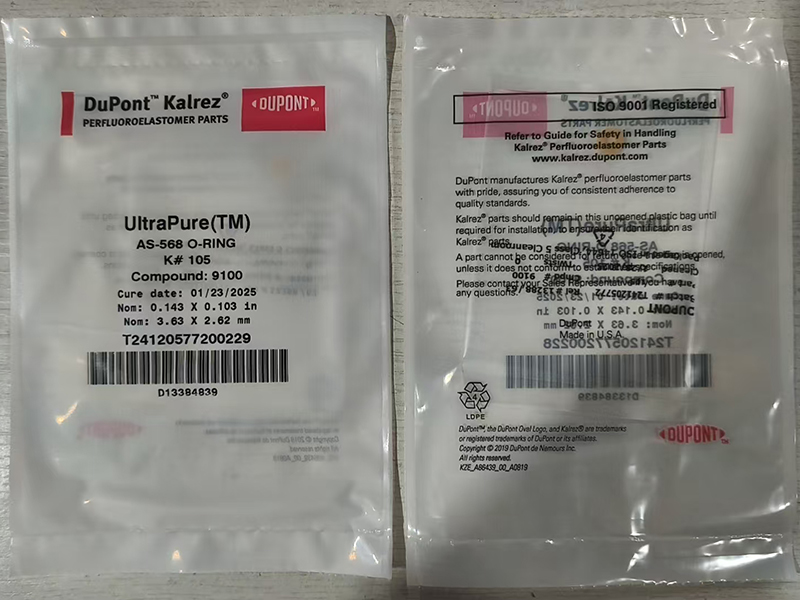
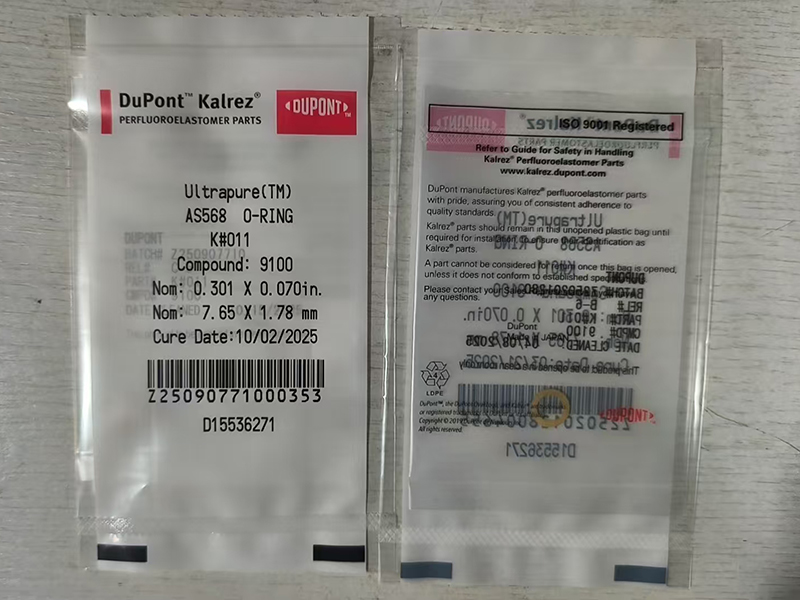
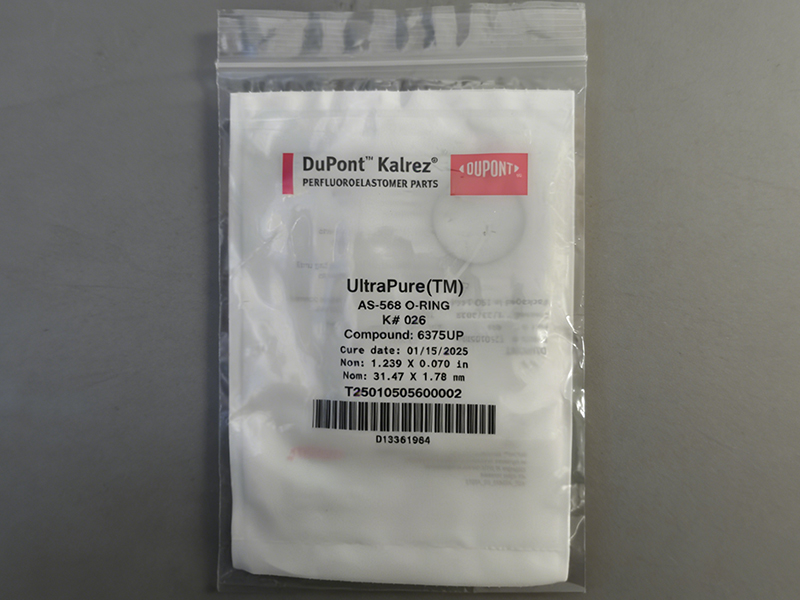
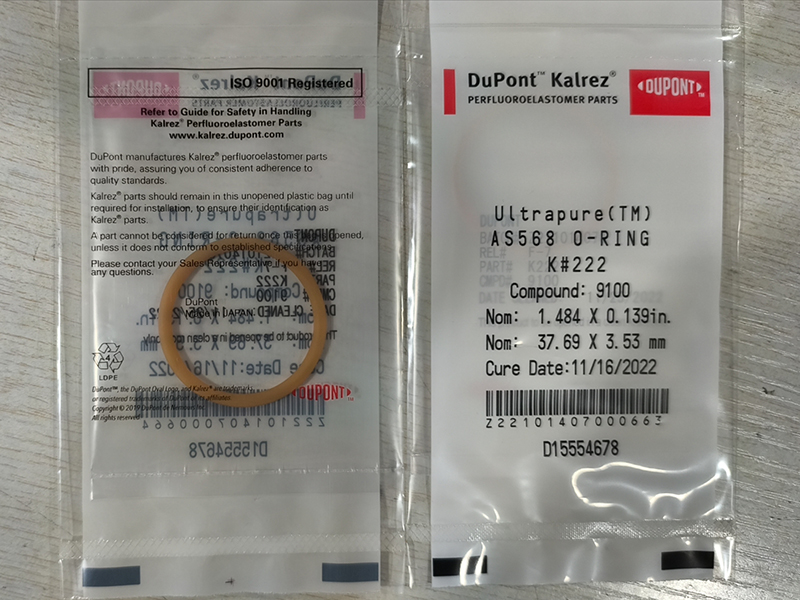
For etch chamber FFKM seals, lifetime is typically 6–18 months depending on plasma chemistry and uptime. Particle generation is the leading indicator of replacement timing. Hitron's Kalrez O-Ring family includes standard and erosion-resistant compounds.
What Are the Particle Sources in Etch?
Particle sources in plasma etch chambers include chamber wall erosion products, FFKM seal erosion products, ESC dielectric erosion, showerhead erosion, slit valve door seal erosion, and operator handling. Particle control requires source identification, mitigation, and continuous monitoring.
|
Particle source |
Mitigation |
|
Chamber wall erosion |
Y₂O₃ coating, low-power plasma |
|
FFKM seal erosion |
Compound selection, low-duty plasma |
|
ESC dielectric erosion |
Ceramic grade, in-situ clean |
|
Showerhead erosion |
Ceramic, in-situ clean |
|
Slit valve door seal |
FFKM compound, low-friction seal |
|
Operator handling |
Automation, glove management |
For ISO Class 3 production tools, particle addition is monitored continuously and components are replaced when particle count rises above specification. Particle wafer inspection is typically performed on 1–5 % of production wafers.
What Is In-Situ Plasma Cleaning?
In-situ plasma cleaning is the periodic application of a cleaning plasma (typ. O₂, CF₄, or SF₆) to the chamber wall, ESC, and showerhead to remove polymer and particle deposits without breaking vacuum, extending the time between wet cleans and component replacement. In-situ cleaning is mandatory for advanced-node production.
|
In-situ clean |
Plasma |
Purpose |
Frequency |
|
Wall clean |
O₂ / CF₄ / SF₆ |
Remove polymer deposit |
Every 25–100 wafers |
|
Seasoning |
Deposition plasma |
Restore wall condition |
After wet clean |
|
ESC clean |
O₂ plasma |
Remove dielectric deposit |
Every 25–50 wafers |
|
Showerhead clean |
O₂ plasma |
Remove deposit |
Every 25–100 wafers |
For 300 mm advanced-node etch, in-situ cleaning is performed every 25–50 wafers to maintain wafer defectivity below 0.01 particles / cm².
What Is Chamber Matching?
Chamber matching is the process of verifying that multiple chambers producing the same process step produce consistent wafer results (etch rate, CD, profile, defectivity) within a specified tolerance, with chamber-to-chamber variation driven by component-to-component variation (chamber wall, ESC, showerhead, FFKM seals). Chamber matching is critical for production ramp and yield.
|
Chamber parameter |
Matching tolerance |
Driver |
|
Etch rate |
< 2 % wafer-to-wafer |
Plasma density, wall condition |
|
CD (critical dimension) |
< 1 nm |
Etch rate uniformity |
|
Profile |
< 2° sidewall |
Plasma distribution |
|
Defectivity |
< 0.01 particles / cm² |
Particle source control |
|
Selectivity |
< 5 % |
Chemistry, wall condition |
For sub-3 nm production, chamber-to-chamber CD matching < 0.5 nm is required. This requires matched chamber components (chamber wall, ESC, showerhead, FFKM seals) and matched seasoning / cleaning protocols.
What Is the End-Point Detection?
End-point detection (EPD) is the optical or electrical monitoring of the etch process to determine when the etch has reached the target layer, with optical emission spectroscopy (OES) being the standard for production etch. EPD avoids over-etch into the underlying layer and improves process control.
|
EPD method |
Mechanism |
Application |
|
Optical emission spectroscopy (OES) |
Plasma emission spectrum |
Standard for most etch |
|
Interferometry (laser) |
Wafer reflectance |
Dielectric etch |
|
Mass spectrometry |
Etch product gas |
Specialty |
|
Impedance monitoring |
Plasma impedance |
Emerging |
For production 300 mm etch, OES + interferometry is the standard combination. Viewport cleanliness is critical for EPD accuracy.
What Are the Slit Valve Door Considerations for Etch?
Slit valve doors in etch chambers must be sealed against halogen plasma penetration, polymer deposition, and particle generation, with FFKM seals being the standard and periodic cleaning being required to remove polymer build-up. Slit valve doors in etch service have shorter lifetime than in CVD / PVD service.
|
Slit valve door in etch |
Standard |
Notes |
|
Seal material |
FFKM (Kalrez 4079, 6375) |
Halogen-resistant |
|
Seal life |
6–12 months (typ.) |
Shorter than CVD |
|
Cleaning |
In-situ plasma + ex-situ |
Polymer removal |
|
Particle |
< 5 per actuation |
Tightened for etch |
Hitron's Slit Valve Door family includes etch-service variants with FFKM seals designed for halogen plasma. See Article 02 for detailed slit valve door selection criteria.
What Are the ESC Considerations for Etch?
ESCs in etch chambers must be plasma-resistant, provide high thermal conductivity, and maintain clamping force under plasma bombardment, with AlN (high thermal conductivity) and Al₂O₃ (standard) being the dominant dielectric materials. ESC lifetime in etch is 6–18 months.
|
ESC in etch |
Standard |
Notes |
|
Dielectric |
Al₂O₃ (standard), AlN (high thermal) |
Plasma + thermal |
|
Clamping |
J-R (fast), Coulombic (high-temp) |
Process-dependent |
|
Backside gas |
He (typ.) |
Pressure controlled |
|
Lifetime |
6–18 months |
Plasma-driven |
|
Particle |
< 5 per wafer |
Tightened for etch |
Hitron's Electrostatic Chuck family includes etch-chamber variants with optimized ceramic and electrode design. See Article 01 for detailed ESC selection criteria.
Frequently Asked Questions
Q: What are the main plasma etch chamber components?
A: Chamber wall, ESC pedestal, showerhead, slit valve door, viewports, FFKM O-rings. Each must be selected for the specific etch chemistry and uptime requirement.
Q: What is the best chamber wall material for halogen etch?
A: Y₂O₃-coated aluminum is the standard for sub-3 nm halogen etch because it provides the lowest plasma erosion and lowest particle generation. Al₂O₃ ceramic is the standard for advanced etch; anodized aluminum is legacy.
Q: What is the typical FFKM lifetime in etch?
A: 6–18 months depending on plasma chemistry, temperature, and uptime. O₂ plasma causes the highest erosion; CF₄ / SF₆ lower.
Q: What is the typical ESC lifetime in etch?
A: 6–18 months in production 300 mm etch. Replacement based on particle count and clamping voltage drift.
Q: What is the typical slit valve door lifetime in etch?
A: 6–12 months in production etch. Shorter than CVD because of halogen plasma erosion.
Q: What is chamber matching?
A: The verification that multiple chambers producing the same process step produce consistent wafer results (etch rate, CD, profile, defectivity) within a specified tolerance. For sub-3 nm, CD matching < 0.5 nm is required.
Q: What is in-situ plasma cleaning?
A: Periodic application of a cleaning plasma (O₂, CF₄, SF₆) to chamber components without breaking vacuum. Standard frequency is every 25–100 wafers.
Q: Does Hitron provide etch-chamber components?
A: Yes. Hitron's Electrostatic Chuck, Slit Valve Door, and Kalrez O-Ring families cover the etch-chamber components most affected by plasma chemistry.
Q: What is the dominant particle source in etch?
A: Chamber wall erosion products and FFKM seal erosion products are the dominant particle sources in production etch. Mitigation includes Y₂O₃ coating and erosion-resistant FFKM compounds.
Conclusion
Plasma etch chamber components must be selected for the specific chemistry (fluorine, chlorine, bromine, oxygen), provide low particle generation, and sustain 6–18 months of production uptime. Chamber wall material (Al₂O₃, Y₂O₃ coating), ESC dielectric (AlN, Al₂O₃), slit valve door seal (FFKM), and FFKM O-ring compound (Kalrez 4079, 6375) are the four main selection variables. Hitron's Electrostatic Chuck, Slit Valve Door, and Kalrez O-Ring product families cover the etch-chamber components, with the Product page listing the full chamber component range. For product range, certifications, and engineering support, consult the About Us and Contact Us pages.