What Is a Slit Valve Door?
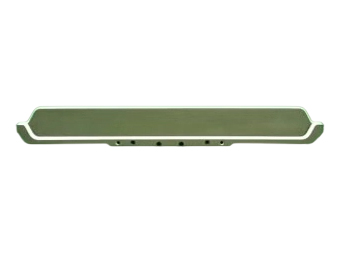
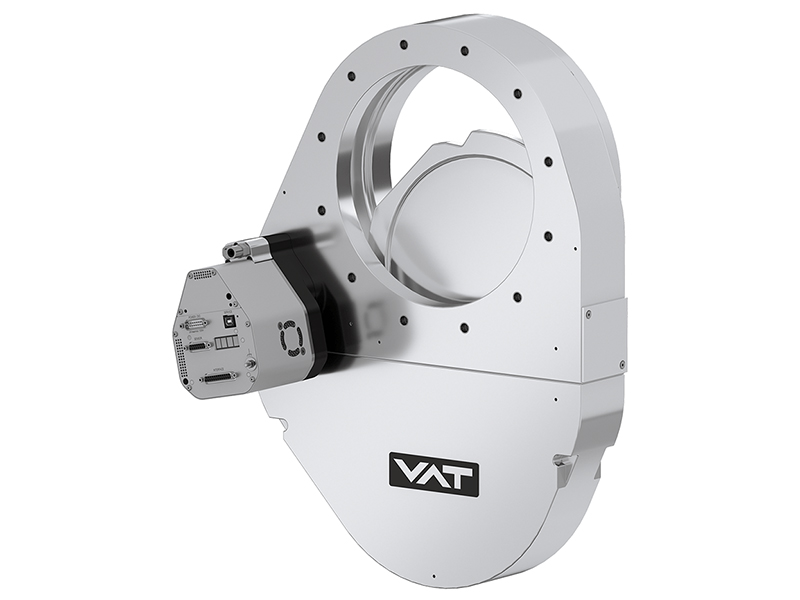
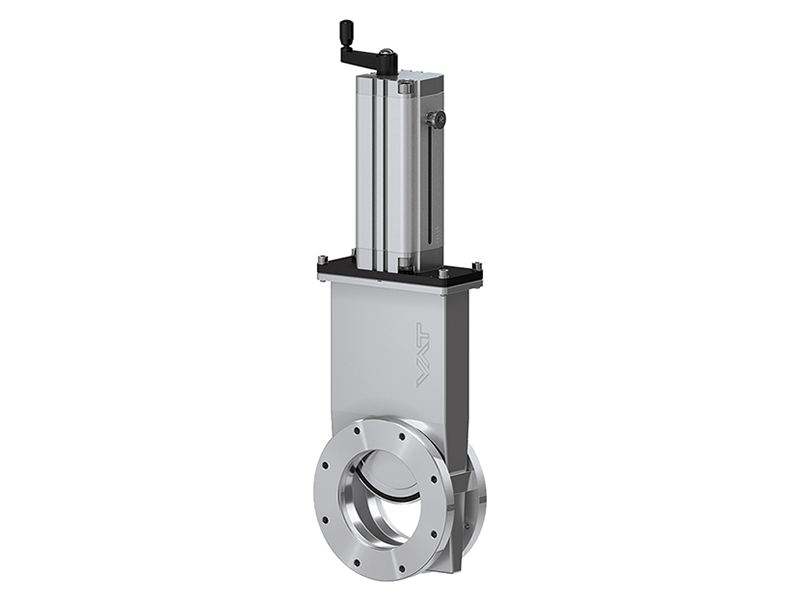
A slit valve door is a rectangular, vertically-actuated gate-valve element that isolates adjacent vacuum chambers in semiconductor process tools, allowing a wafer-handling robot to transfer wafers between chambers while maintaining UHV sealing when closed. The slit valve door is the moving seal of a slit valve, with the body and actuator being separate.
Typical slit valve door applications:
Load lock to transfer chamber isolation.
Transfer chamber to process chamber isolation.
Process chamber to buffer chamber isolation.
Vacuum to atmosphere isolation (load lock).
Multi-chamber cluster tool isolation.
The slit valve door's defining feature is the rectangular shape matched to the wafer / robot footprint, which is more compact than a circular gate valve of equivalent flow area.
How Does a Slit Valve Work?
A slit valve door operates by linear actuation (pneumatic, electric, or servo) to translate a rectangular sealing plate between an open position (wafer pass-through) and a closed position (sealed against the chamber wall via an elastomer O-ring or metal gasket). The actuator provides the force needed to overcome the differential pressure and seal friction.
|
Slit valve actuation |
Force source |
Speed |
Notes |
|
Pneumatic |
Compressed air (4–6 bar) |
< 1 s |
Standard, simple control |
|
Electric |
Stepper / servo motor |
< 0.5 s |
Precise, integrated control |
|
Manual |
Hand lever |
Manual |
Service only |
|
Solenoid |
DC voltage |
< 0.5 s |
Compact, low force |
For production 300 mm tools, pneumatic actuation is standard because it provides high force, fast cycle, and simple control. Electric servo actuation is used where precise position feedback is required.
What Are the Key Specifications?
The key slit valve door specifications are sealing type (elastomer vs. metal), cycle life, leak rate, particle generation, opening time, and actuation force. Each specification is controlled to meet the process tool's uptime and contamination requirements.
|
Specification |
Standard value |
Notes |
|
Sealing type |
FFKM (Kalrez) O-ring or metal gasket |
Determines leak rate, temperature |
|
Cycle life |
1,000,000 to 10,000,000 cycles |
Replaced at end-of-life |
|
Leak rate |
< 1×10⁻⁹ std cc/s He |
UHV requirement |
|
Particle generation |
< 3 particles @ ≥ 50 nm / ft³ |
ISO Class 3 cleanroom |
|
Opening time |
< 1 s (typ.) |
Throughput-dependent |
|
Actuation force |
100–500 N |
Depends on differential pressure |
|
Differential pressure |
1 atm (typ.) |
Process chamber vs. transfer |
|
Temperature range |
−50 °C to +200 °C (elastomer), up to +400 °C (metal) |
Process chamber side |
|
Mounting flange |
CF, ISO, or custom |
Matches chamber OEM |
For advanced-node logic and memory, the leak rate is specified < 1×10⁻¹⁰ std cc/s He to prevent cross-contamination between chambers.
What Are the Sealing Options?
Slit valve doors use either elastomer O-rings (FFKM / Kalrez for high-temperature and chemical resistance) or metal gaskets (for ultra-high temperature and lowest leak rates), with FFKM being the standard for production semiconductor tools. The sealing choice is driven by the process chamber's temperature, chemistry, and uptime requirements.
|
Sealing type |
Temperature |
Leak rate |
Cycle life |
Application |
|
FFKM (Kalrez) |
Up to +200 °C (typ.) |
< 1×10⁻⁹ std cc/s He |
1,000,000+ |
Standard production |
|
FKM (Viton) |
Up to +200 °C |
< 1×10⁻⁸ std cc/s He |
500,000+ |
Lower temperature, lower cost |
|
Metal (Cu, Al) |
Up to +400 °C |
< 1×10⁻¹⁰ std cc/s He |
10,000 (limited) |
High-temperature, low-cycle |
|
None (gate) |
n/a |
< 1×10⁻¹¹ std cc/s He |
100,000 (limited) |
Isolation valve, occasional use |
FFKM (Kalrez) is the standard for production slit valve doors because it provides the best balance of leak rate, cycle life, and temperature resistance.
What Is Cycle Life and How Is It Determined?
Slit valve door cycle life is determined by the elastomer wear (O-ring compression set, abrasion), the actuator wear (seal friction, bushing wear), and the particle generation rate, with typical production cycle life of 1–10 million cycles before preventive replacement. Cycle life testing follows SEMI standards (SEMI E12, SEMI E47).
|
Cycle test |
Standard |
Method |
|
Cycle endurance |
SEMI E12 |
1,000,000+ cycles with leak rate check |
|
Particle test |
SEMI E12, ISO 14644 |
Particle count before / after cycles |
|
Actuation force |
SEMI E12 |
Force measurement over cycles |
|
Sealing force |
SEMI E12 |
Force on O-ring over cycles |
For 300 mm production tools with high throughput, slit valve doors are replaced every 1–2 years as preventive maintenance, well before the rated cycle life.
How Does the Slit Valve Door Move?
The slit valve door is actuated by a linear mechanism (pneumatic cylinder, electric linear actuator, or solenoid) that translates the door vertically or horizontally between the open and closed positions, with the position monitored by magnetic, optical, or mechanical sensors for closed-loop control. Modern slit valve doors include position feedback for predictive maintenance.
|
Actuation |
Force |
Speed |
Control |
Position feedback |
|
Pneumatic |
100–500 N |
< 1 s |
Solenoid valve |
Limit switch |
|
Electric servo |
50–300 N |
< 0.5 s |
Servo drive |
Encoder |
|
Solenoid |
50–200 N |
< 0.5 s |
Direct drive |
Limit switch |
For predictive maintenance, electric servo actuation provides real-time position feedback and force profiles, allowing early detection of seal wear or actuator degradation.
What Are the Particle Considerations?
Slit valve doors must generate minimal particles because particles landing on the wafer during transfer cause defectivity and yield loss, with the standard being < 3 particles @ ≥ 50 nm added per ft³ of cleanroom air per door actuation. Particle control is achieved by surface finish, sealing material selection, and actuation smoothness.
|
Particle source |
Mitigation |
|
O-ring abrasion |
Low-friction seal geometry, FFKM material |
|
Door surface |
Ra ≤ 0.4 μm, electropolished |
|
Actuator vibration |
Soft-start / soft-stop control |
|
Bushing wear |
Hardened bushing, low-friction coating |
|
Particle trapping |
Edge seal geometry |
For ISO Class 3 cleanroom tools, slit valve doors are tested per SEMI E12 and ISO 14644 to verify particle addition below the specified limit.
What Is the Standard Mounting?
Slit valve doors mount to the chamber wall via a standard flange (CF, ISO-K, or custom) with the door sliding against an O-ring or metal gasket face on the chamber side, and the actuator mounted externally for service access. The mounting design must allow door replacement without breaking chamber vacuum.
|
Mounting flange |
Size |
Standard |
|
CF (ConFlat) |
2.75" to 10" |
ISO 3669, Vacuum compatible |
|
ISO-K |
63 to 250 mm |
ISO 1609, Vacuum compatible |
|
ISO-F |
63 to 250 mm |
ISO 1609, with bolts |
|
Custom |
OEM-specific |
Per chamber specification |
For service, the slit valve door and actuator are typically replaced as a unit to minimize downtime. Hitron's Slit Valve Door family includes standard mounting configurations matching common chamber OEMs.
How Does Slit Valve Door Compare to Other Isolation Valves?
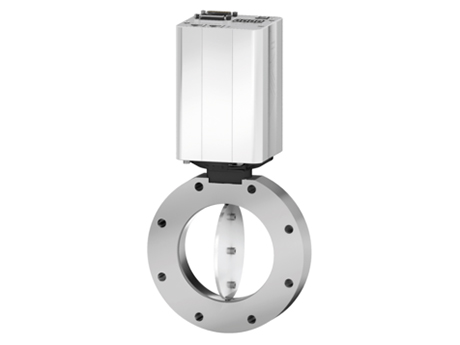
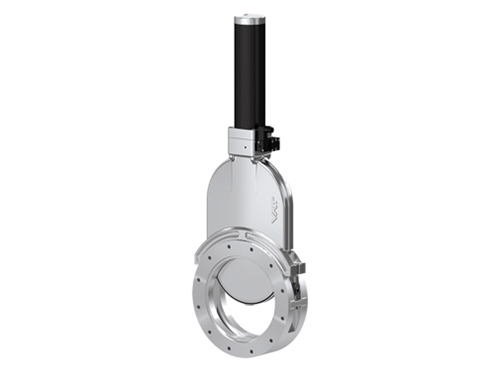
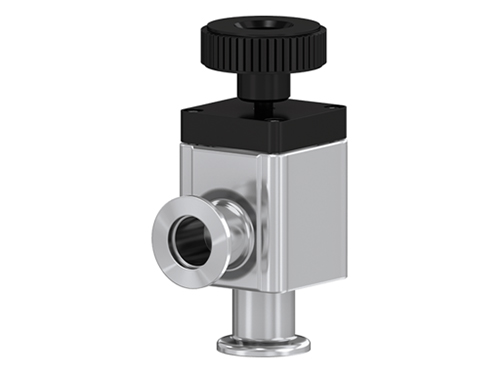
Slit valve doors are preferred over circular gate valves for wafer transfer because the rectangular shape matches the wafer / robot footprint, providing more compact installation and faster cycle. For non-wafer applications (gas lines, foreline), circular valves are preferred.
|
Isolation valve |
Shape |
Application |
Cycle life |
|
Slit valve door |
Rectangular |
Wafer transfer |
1,000,000+ |
|
Circular gate valve |
Circular |
Gas, foreline |
100,000+ |
|
Angle valve |
L-shaped |
Foreline |
100,000+ |
|
Poppet valve |
Poppet |
Gas injection |
1,000,000+ |
For 300 mm cluster tools, slit valve doors are universal because they match the wafer-handling robot's footprint and provide the compact installation required.
Frequently Asked Questions
Q: What is the difference between a slit valve and a gate valve?
A: A slit valve uses a rectangular door matched to the wafer / robot footprint, while a gate valve uses a circular disk for gas / foreline isolation. Slit valves are used for wafer transfer; gate valves for non-wafer isolation.
Q: What is the typical cycle life of a slit valve door?
A: 1,000,000 to 10,000,000 cycles for FFKM-sealed doors; 100,000 to 1,000,000 for metal-sealed doors. Production tools typically replace the door every 1–2 years as preventive maintenance.
Q: What material is used for the slit valve door sealing?
A: FFKM (Kalrez) is the standard for production tools because of its chemical resistance, temperature range, and cycle life. FKM (Viton) is used for lower-temperature and lower-cost applications. Metal gaskets are used for ultra-high temperature and lowest leak rates.
Q: How fast does a slit valve door open and close?
A: < 1 second for pneumatic actuation; < 0.5 second for electric servo. Cycle time is throughput-dependent and must be coordinated with the wafer-handling robot.
Q: What is the leak rate requirement?
A: < 1×10⁻⁹ std cc/s He for production semiconductor tools; < 1×10⁻¹⁰ std cc/s He for advanced-node (sub-3 nm) tools.
Q: Can slit valve doors be repaired?
A: Seals (O-rings) can be replaced in the field. The door body and actuator are typically replaced as a complete assembly to minimize downtime and avoid re-calibration issues.
Q: What is the difference between FFKM and FKM?
A: FFKM (perfluoroelastomer, e.g., Kalrez) is fully fluorinated and provides the highest chemical and temperature resistance. FKM (fluoroelastomer, e.g., Viton) is partially fluorinated and provides lower cost and lower temperature resistance. FFKM is the standard for high-temperature and aggressive-chemistry semiconductor processes.
Q: Does Hitron offer custom slit valve doors?
A: Yes. Hitron's Slit Valve Door family includes standard and custom slit valve door designs for OEM and aftermarket applications. Contact the Hitron engineering team for custom requirements.
Q: What is the operating temperature of a slit valve door?
A: −50 °C to +200 °C with FFKM sealing; up to +400 °C with metal sealing. For high-temperature process chambers (PVD, ALD), metal-sealed slit valves are used.
Conclusion
The slit valve door is the workhorse isolation element for wafer transfer between adjacent vacuum chambers in semiconductor front-end equipment, with FFKM sealing, pneumatic or servo actuation, and 1–10 million cycle life. Selection is driven by chamber OEM specification, process temperature, leak rate requirement, and uptime targets. Hitron's Slit Valve Door product line covers standard slit-valve door assemblies used in load locks, transfer chambers, and process module isolation, with the Product page listing the full front-end equipment component range and the Application page describing process integration. For product range, certifications, and engineering support, consult the About Us and Contact Us pages.