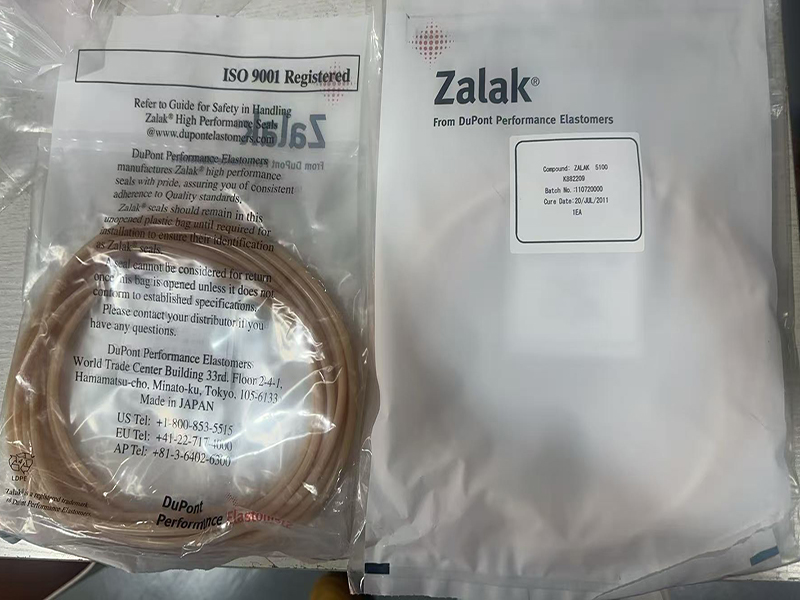
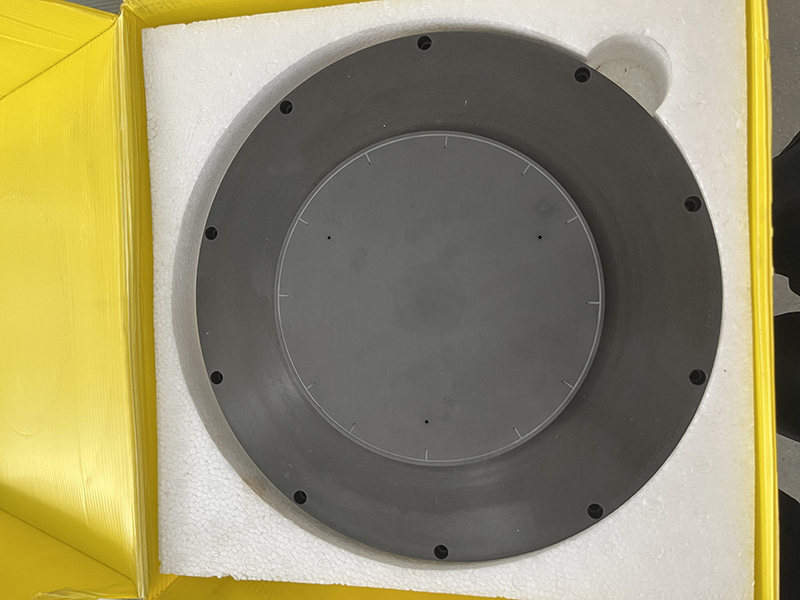
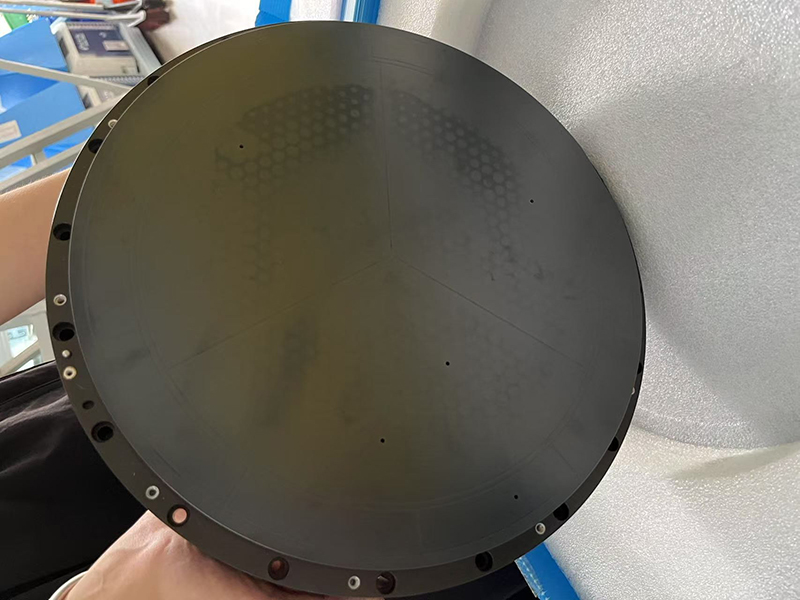
Why Does FFKM Chemical Resistance Matter?
FFKM chemical resistance matters because the elastomer must survive the specific chemistry of the process tool (acid, base, solvent, plasma) without swelling, hardening, cracking, or losing sealing force, and FFKM is the only elastomer that provides the broadest resistance across all four chemistry categories. Standard elastomers (FKM, EPDM, silicone) fail in one or more categories.
The four chemistry categories and FFKM resistance:
|
Chemistry category |
FFKM resistance |
Standard elastomer resistance |
|
Concentrated acids |
Excellent |
Limited (HNO₃, HF fail most) |
|
Bases |
Excellent |
Good (EPDM) |
|
Solvents |
Excellent |
Limited (acetone, NMP fail FKM) |
|
Plasma |
Compound-dependent |
Poor (most elastomers fail) |
For semiconductor tools that combine multiple chemistries (wet + dry process), FFKM is the only elastomer that provides reliable service across the full process flow.
How Is FFKM Chemical Resistance Tested?
FFKM chemical resistance is tested per ASTM D471 (immersion in the test fluid at the target temperature for 70 hours, followed by measurement of volume, hardness, and tensile changes), with the acceptance criterion typically < 10 % volume change, < 5 hardness points change, and < 50 % tensile change. Vendor data sheets report ASTM D471 results for standard chemicals.
|
Test |
Standard |
Method |
|
Immersion |
ASTM D471 |
70 h at target temperature |
|
Volume change |
ASTM D471 |
% swell |
|
Hardness change |
ASTM D471 |
Shore A delta |
|
Tensile change |
ASTM D471 |
% change |
|
Visual |
ASTM D471 |
Cracking, blistering |
For non-standard chemistries, prototype testing in the actual process fluid is recommended. ASTM D471 is a screening test; actual service may differ.
What Is the Acid Resistance?
FFKM is resistant to most concentrated acids including HCl, H₂SO₄, HNO₃, acetic acid, and HF (with limitations), with typical volume change < 5 % at room temperature and < 15 % at +100 °C. HF resistance is compound-dependent and requires careful compound selection.
|
Acid |
Concentration |
FFKM volume change (70 h, RT) |
Notes |
|
HCl |
37 % |
< 2 % |
Excellent |
|
H₂SO₄ |
98 % |
< 5 % |
Excellent |
|
HNO₃ |
70 % |
< 5 % |
Excellent |
|
HF |
49 % |
< 10 % (compound-dep.) |
Compound-dependent |
|
Acetic acid |
Glacial |
< 3 % |
Excellent |
|
Aqua regia |
HCl / HNO₃ |
< 10 % |
Excellent |
For HF service, special FFKM compounds (e.g., Kalrez 6375) are required. Standard FKM and EPDM fail rapidly in HF.
What Is the Base Resistance?
FFKM is resistant to most concentrated bases including NaOH, KOH, NH₄OH, and amines, with typical volume change < 3 % at room temperature and < 10 % at +100 °C. Base resistance of FFKM is excellent across the standard semiconductor wet chemistries.
|
Base |
Concentration |
FFKM volume change (70 h, RT) |
Notes |
|
NaOH |
50 % |
< 2 % |
Excellent |
|
KOH |
45 % |
< 2 % |
Excellent |
|
NH₄OH |
28 % |
< 3 % |
Excellent |
|
TMAH (tetramethylammonium hydroxide) |
25 % |
< 5 % |
Standard developer chemistry |
|
Amines |
Various |
< 5 % |
Compound-dependent |
For semiconductor wet-process (developer, stripper), FFKM provides excellent base resistance where FKM and EPDM may swell or degrade.
What Is the Solvent Resistance?
FFKM is resistant to most organic solvents including acetone, IPA, toluene, NMP, DMF, and methylene chloride, with typical volume change < 5 % at room temperature. Solvent resistance is a key advantage over FKM, which fails in many solvents.
|
Solvent |
FFKM volume change (70 h, RT) |
FKM volume change |
|
Acetone |
< 3 % |
30–50 % (fail) |
|
IPA |
< 2 % |
< 5 % |
|
Toluene |
< 3 % |
10–20 % |
|
NMP (N-methyl-2-pyrrolidone) |
< 5 % |
30–50 % (fail) |
|
DMF (dimethylformamide) |
< 5 % |
30–50 % (fail) |
|
Methylene chloride |
< 5 % |
30–50 % (fail) |
|
Acetonitrile |
< 3 % |
10–20 % |
|
Methanol |
< 2 % |
< 5 % |
For photoresist strip and solvent cleaning, FFKM is the standard because FKM and EPDM fail rapidly.
What Is the Plasma Resistance?
FFKM plasma resistance is compound-dependent and chemistry-dependent, with most FFKM compounds losing 5–200 nm/min of surface under aggressive plasma and forming a passivation layer that protects the bulk elastomer. The plasma resistance determines seal lifetime in dry-process equipment.
|
Plasma chemistry |
FFKM erosion rate (typ.) |
Compound selection |
|
O₂ plasma |
20–100 nm/min |
Compound-dependent |
|
CF₄ plasma |
10–50 nm/min |
Compound-dependent |
|
SF₆ plasma |
30–80 nm/min |
Compound-dependent |
|
Cl₂ / HBr plasma |
20–60 nm/min |
Compound-dependent |
|
Ar sputter |
50–200 nm/min |
All compounds erode |
|
H₂ plasma |
< 5 nm/min |
Excellent resistance |
|
N₂ plasma |
< 10 nm/min |
Good resistance |
For O₂ plasma (ash / strip), FFKM compounds with high filler content (e.g., Kalrez 4079) provide the longest lifetime. For halogen plasma (etch), Kalrez 6375 is preferred.
What Is the Temperature Resistance?
FFKM temperature resistance depends on the compound, with standard compounds rated +200 °C continuous (Kalrez 4079, 6375, 9100, 1050LF) and high-temperature compounds rated +300 to +325 °C continuous (Kalrez 9500, Chemraz 555). Excursion temperatures can be +50 to +100 °C above the continuous rating for short durations.
|
Compound |
Continuous temperature |
Excursion |
Notes |
|
Kalrez 4079 |
+200 °C |
+250 °C |
Standard semiconductor |
|
Kalrez 6375 |
+200 °C |
+250 °C |
Broad chemical |
|
Kalrez 9100 |
+200 °C |
+250 °C |
Low compression set |
|
Kalrez 9500 |
+325 °C |
+350 °C |
High-temperature |
|
Kalrez 1050LF |
+200 °C |
+250 °C |
Low friction |
|
Chemraz 555 |
+325 °C |
+350 °C |
High-temperature |
For ALD, PVD, and high-temperature process chambers, Kalrez 9500 or Chemraz 555 are required. For standard etch / CVD / load lock, Kalrez 4079 or 6375 are standard.
What Are the Standard FFKM Compounds and Their Chemical Profile?
The standard FFKM compounds and their chemical profiles are matched to the process chemistry and temperature, with the most common semiconductor compounds being Kalrez 4079, 6375, 9100, 9500, and 1050LF. Each compound has a specific chemical and mechanical profile.
|
Compound |
Acid |
Base |
Solvent |
Plasma |
Temperature |
|
Kalrez 4079 |
Excellent |
Excellent |
Excellent |
Excellent (CF₄, O₂) |
+200 °C |
|
Kalrez 6375 |
Excellent (incl. HF) |
Excellent |
Excellent |
Excellent (halogen) |
+200 °C |
|
Kalrez 9100 |
Excellent |
Excellent |
Excellent |
Excellent |
+200 °C |
|
Kalrez 9500 |
Excellent |
Excellent |
Excellent |
Excellent |
+325 °C |
|
Kalrez 1050LF |
Excellent |
Excellent |
Excellent |
Excellent |
+200 °C |
For most semiconductor applications, Kalrez 4079 or 6375 is the standard. For halogen etch, 6375 is preferred. For high-temperature, 9500 is required.
How Does FFKM Compare to PTFE?
PTFE (polytetrafluoroethylene) provides similar chemical resistance to FFKM but is not an elastomer (it is a rigid thermoplastic), so it cannot provide the elastic recovery required for static and dynamic sealing. FFKM is used where elastomeric sealing is required; PTFE is used where rigid gaskets or machined shapes are acceptable.
|
Property |
FFKM |
PTFE |
|
Form |
Elastomer |
Rigid thermoplastic |
|
Hardness |
70–90 Shore A |
55–60 Shore D |
|
Elastic recovery |
Yes |
No |
|
Compression set |
15–30 % |
n/a (plastic deformation) |
|
Chemical resistance |
Excellent |
Excellent |
|
Temperature |
+200 to +325 °C |
+260 °C |
|
Vacuum |
Excellent |
Excellent |
For O-ring and dynamic seal applications, FFKM is required. For rigid gasket and machined seal applications, PTFE is used.
How Is FFKM Selected for Multi-Chemistry Service?
For multi-chemistry service (e.g., wet + dry process in the same tool), FFKM is the standard because it provides resistance across acids, bases, solvents, and plasma; standard elastomers fail in at least one chemistry category. The selection process for multi-chemistry:
List all chemistries the seal will contact.
List all temperatures (continuous + excursion).
List all mechanical requirements (static vs. dynamic).
Select the FFKM compound with the broadest chemical compatibility.
Verify with prototype testing in the actual chemistry mix.
Hitron's Kalrez O-Ring family covers the standard FFKM compounds for multi-chemistry service.
What Are the Limitations of FFKM?
FFKM has four main limitations: cost (highest among elastomers), low-temperature flexibility (typ. −10 °C, brittle at lower temperatures), limited dynamic seal capability (high friction), and specific compound requirements for plasma resistance. Each limitation is addressable.
|
Limitation |
Mitigation |
|
High cost |
Use FFKM only where required; FKM elsewhere |
|
Low-temperature brittleness |
Use EPDM or silicone for cold service |
|
High friction (dynamic) |
Use Kalrez 1050LF (low friction) |
|
Plasma erosion |
Compound selection, low-duty plasma |
For dynamic seal applications with frequent motion, FFKM is limited to < 1 m/s surface speed. For higher speeds, PTFE or metal seals are preferred.
Frequently Asked Questions
Q: What is FFKM chemical resistance?
A: FFKM is resistant to most concentrated acids (HCl, H₂SO₄, HNO₃, HF with compound selection), bases (NaOH, KOH, NH₄OH), solvents (acetone, IPA, toluene, NMP), and semiconductor plasmas (O₂, CF₄, SF₆, Cl₂, HBr) at elevated temperatures.
Q: Can FFKM withstand HF?
A: Yes, with proper compound selection (e.g., Kalrez 6375). Standard FFKM compounds may swell in HF; HF-resistant compounds are required.
Q: Can FFKM be used in acetone?
A: Yes. FFKM is resistant to acetone where FKM and EPDM fail.
Q: What is the temperature range of FFKM?
A: Standard compounds rated +200 °C continuous; high-temperature compounds (Kalrez 9500, Chemraz 555) rated +325 °C continuous.
Q: Can FFKM be used at low temperature?
A: FFKM has a glass transition around −10 °C and becomes brittle below that. For sub-zero service, EPDM or silicone are preferred.
Q: How does FFKM compare to PTFE?
A: FFKM is an elastomer with elastic recovery; PTFE is a rigid thermoplastic. FFKM is used for O-ring and dynamic seal; PTFE for rigid gasket.
Q: What is the best FFKM compound for halogen plasma?
A: Kalrez 6375 is the standard for halogen plasma service because of its broad chemical compatibility and halogen resistance.
Q: Does Hitron offer multi-chemistry FFKM compounds?
A: Yes. Hitron's Kalrez O-Ring family includes standard and multi-chemistry FFKM compounds for semiconductor wet + dry process service.
Q: Can FFKM seals be reused after chemical exposure?
A: FFKM seals are typically single-use, replaced at preventive maintenance. Reused seals may not provide reliable sealing due to compression set.
Conclusion
FFKM provides the broadest chemical resistance of any elastomer family, withstanding concentrated acids, bases, solvents, and semiconductor plasmas at elevated temperatures. Compound selection (Kalrez 4079, 6375, 9100, 9500, 1050LF) is driven by the specific chemistry, temperature, and mechanical requirements. For multi-chemistry service (wet + dry process), FFKM is the standard. Hitron's Kalrez O-Ring family covers the standard FFKM compounds for semiconductor wet and dry process service, with the Slit Valve Door family providing FFKM-sealed wafer transfer interfaces and the Product page listing the full chamber component range. For product range, certifications, and engineering support, consult the About Us and Contact Us pages.