An O-ring that lasts a year on a solvent line can fail in eleven days inside a downstream plasma etcher. The rubber did not change. The chemistry did — and so did the temperature, the radical flux, and the number of times somebody opened the chamber that month.
That is the practical meaning of an ultra chemical resistant Kalrez O-ring in semiconductor service. It is not one number on one datasheet. It is a compound, a gland, a surface finish and a batch record that stay consistent under a specific recipe. Take any one of those four out and the seal becomes ordinary.
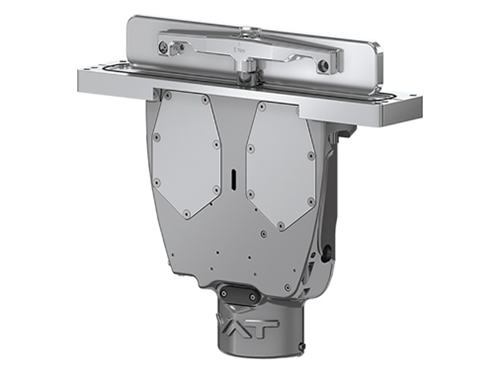
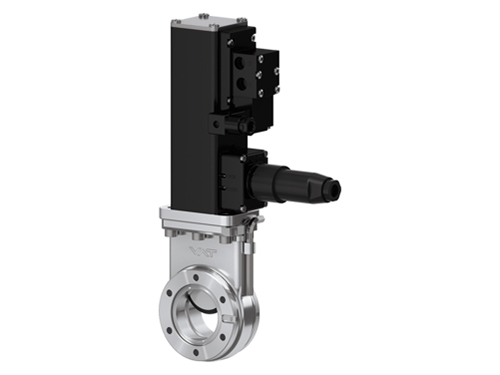
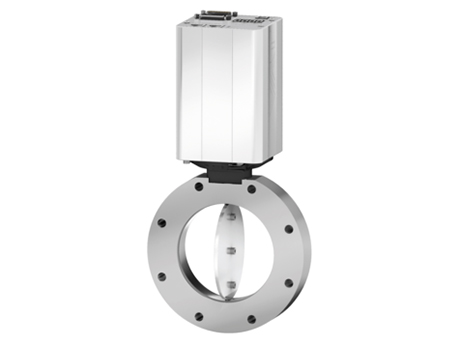
Wuxi Hitron Semiconductor Co., Ltd. supplies FFKM seals and Kalrez O-ring replacements, slit valve doors, electrostatic chuck hardware and vacuum valve components to front-end fabs and equipment OEMs. Most of the seal inquiries we receive start the same way: a photograph of a failed part, a part number, and a request for "something more resistant." The answer is rarely a harder compound. Below is the reasoning we walk through before quoting.
Ultra Chemical Resistance Is a Three-Axis Property
Suppliers quote chemical resistance as a compatibility chart: fluid in the left column, swell percentage on the right. That chart is useful and almost useless at the same time, because a process chamber does not expose a seal to one fluid at one temperature.
Three axes matter, and a seal has to pass all three at once:
- Media. HF, buffered HF, SC-1, SC-2, ozone-DI, NMP, PGMEA, amines, chlorine and fluorine radicals. Each attacks a different part of the polymer backbone or the filler system.
- Temperature. A seal at 180 °C in the same chemistry degrades several times faster than the same seal at 90 °C. Compression set climbs, and the seal stops returning to its groove.
- Mechanical duty. Static face seal, slow gate motion, or repeated compression each cycle. A compound chosen for chemical inertness alone may be too hard to seal a light flange load, or too soft to survive a door that closes 40,000 times.
An ultra chemical resistant Kalrez O-ring is the compound that wins on all three axes for your recipe — not the one with the shortest compatibility table.
Where the Chemistry Actually Attacks
|
Service location |
Dominant media |
Attack mode on the seal |
What to specify first |
|
Wet bench, single-wafer clean |
HF, BOE, SC-1, SC-2, ozone water |
Swell, extraction of low-mass species, surface erosion |
Low-extractable UltraPure grade; verified swell data in the actual mix |
|
Plasma etch, strip, CVD |
F, Cl, O radicals; ion bombardment |
Surface hardening, filler exposure, micro-cracking, then leak path |
Plasma-grade compound; metal-content certificate |
|
Litho track, solvent lines |
PGMEA, NMP, acetone, amines |
Swelling, compression set, adhesion to the groove |
Solvent-resistant grade; groove fill margin |
|
Load lock, slit valve, transfer |
Rare exposure, high cycling, occasional clean |
Abrasion, take-in of particles, permanent deformation |
Compression-set behavior and cycle life, not chemistry |
The right column matters more than the middle ones. In our experience, more "chemical failures" on semiconductor tools come from a mismatch in the fourth row than from a compound that could not handle the fluid.
Wet clean is a slow, patient attack
HF does not usually destroy an FFKM seal in one shift. It extracts, swells, and roughens. The visible result is a seal that has grown a few percent in cross section and no longer sits in its groove, so the flange load drops and a leak appears elsewhere. Inspectors then blame the flange or the hardware torque. The seal was the root cause three weeks earlier.
Plasma is a fast, local attack
Radical flux changes the surface, not the bulk of the part. The top few microns harden and crack, filler particles are exposed, and particles start coming off the seal into the chamber. On an etcher, an ultra chemical resistant Kalrez O-ring that has hardened at the surface often still passes a leak check — and still contributes defectivity.
Solvents are a mechanical problem in disguise
NMP and PGMEA swell the elastomer, and the seal that swells is the seal that takes a permanent set. Once the set is permanent, the seal leaks at low temperature even though the chemistry has been removed from the line.
Compound Families You Will Meet
Most semiconductor FFKM supply falls into a small number of families. The labels differ by supplier, but the questions do not.
|
Family |
Typical position in a tool |
What to confirm before release |
|
General-purpose FFKM (for example the widely used 9100-type compounds) |
Utility lines, purge, non-critical isolation |
Swell data in your media; compression set at your temperature |
|
UltraPure / low-metal grades (for example 6375UP-type) |
Etch, CVD, clean, anywhere near the wafer |
Extractables and metal-ion report per lot; cure date on the bag |
|
High-purity wet-process grades (Zalak-type) |
Wet benches, chemical delivery, high-purity lines |
Particle and extraction data after a wet-cycle soak |
|
Metal-free / filler-free variants |
Critical dielectric and particle-sensitive locations |
Confirmation that no carbon black or mineral filler is present |
Two practical rules from the floor:
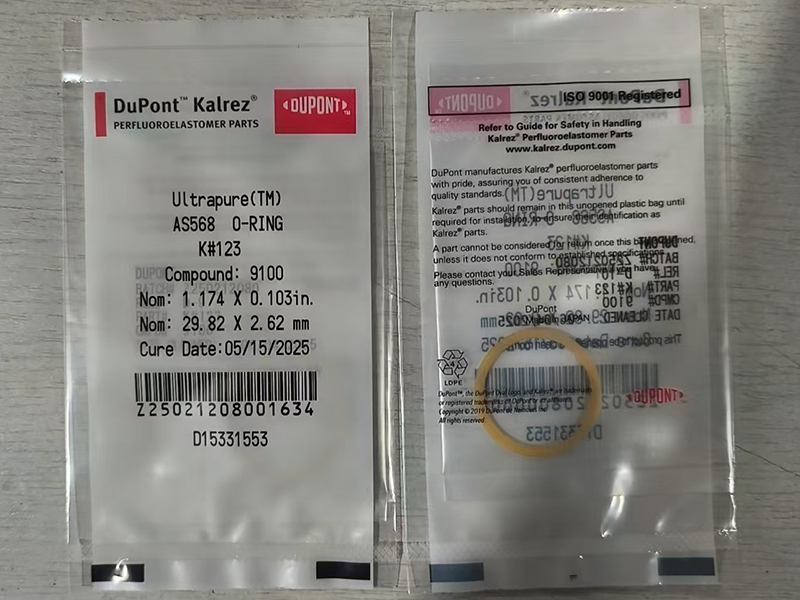
1. Ask for the compound designation *and* the cure date. A bag without a cure date is a bag with unknown shelf life, and shelf life affects compression set before the part ever sees a chamber.
2. Ask what the seal was tested in. Compatibility data generated in a static soak at 25 °C tells you very little about a 150 °C flowing chemistry with radical exposure.
Reading a Failed Seal Before You Reorder
The failure pattern usually tells you whether to change the compound, the gland, or the installation procedure. Changing the compound when the gland is wrong is an expensive way to learn nothing.
|
What you see |
Most likely cause |
Corrective action |
|
Hard, glossy, cracked surface; fine cracks at the sealing land |
Plasma or ozone attack, or thermal aging |
Plasma-grade compound; check actual surface temperature, not setpoint |
|
Seal swollen, soft, stuck in the groove |
Solvent swell, incompatible compound |
Solvent-grade compound; widen groove fill margin |
|
Flat, rectangular cross section; no rebound |
Compression set from sustained heat or over-deflection |
Lower squeeze or lower hardness; verify groove depth |
|
Clean break or torn edge |
Installation damage, sharp groove edge, or wrong extraction tool |
Deburr groove; chamfer lead-in; review install method |
|
Black or grey residue at the seal, particles on wafers |
Filler exposure after surface erosion |
Filler-free or UltraPure compound; review plasma duty |
|
Leak at low temperature only, gone when warm |
Permanent set plus marginal squeeze |
Recalculate squeeze at the cold condition |
Gland Design: Where Most "Chemical" Failures Start
- Squeeze. For a static face seal, 15–25 % cross-section compression is the usual band. Below 12 %, small temperature excursions open a leak path. Above 30 %, compression set accelerates.
- Groove fill. The elastomer has to have somewhere to go. Keep the cross-section area below roughly 85 % of the groove volume at maximum temperature, or the seal behaves like a hydraulic fluid.
- Surface finish. A sealing land around 0.4–0.8 µm Ra is a reasonable target for elastomer seals. Too rough leaks; too smooth can promote adhesion and tearing on opening.
- Concentricity and flatness. A door or flange that is not flat will compress one side of the seal and unload the other. No compound fixes that.
Traceability Is Part of Chemical Resistance
Every genuine Kalrez bag carries a compound code, a dash number, a cure date and a traceability or batch number. Hitron keeps those identifiers on the record for each shipment, so a fab can trace a lot back to the cure date when a chamber shows an unexplained particle excursion.
The reason is simple: counterfeit and re-bagged FFKM is a real problem in the aftermarket. A bag with the right logo and the wrong cure date is a seal with unknown age, and aged FFKM has already lost part of the compression-set margin you paid for. When an ultra chemical resistant Kalrez O-ring is specified for a critical chamber, ask for the bag labeling, not just the part number.
Why Fabs Buy Seals From Hitron
Wuxi Hitron Semiconductor Co., Ltd. builds its seal business around three commitments that matter to a process engineer:
- Standard and non-standard sizes. AS-568 dash numbers in the common K-series, plus custom geometry for doors, flanges and viewport hardware.
- Documentation. Compound designation, cure date and lot traceability travel with the part.
- Application support. We will look at the failed seal, the groove drawing and the recipe, and tell you whether the problem is chemistry, geometry or installation.
OEM-level support, a 3,000 m² workshop and a spare-parts inventory built for rapid response are the commercial side of the same argument: a seal is a consumable, and consumables are only valuable when they arrive before the tool goes down.
If you are qualifying an ultra
chemical resistant Kalrez O-ring for a new recipe, send the media list, the operating temperature range and the groove drawing. That is enough for us to shortlist two compounds and one gland correction, usually within a working day.
Contact: Jerry@hitronsemi.com · +86 18101522032 · Wuxi, Jiangsu, China