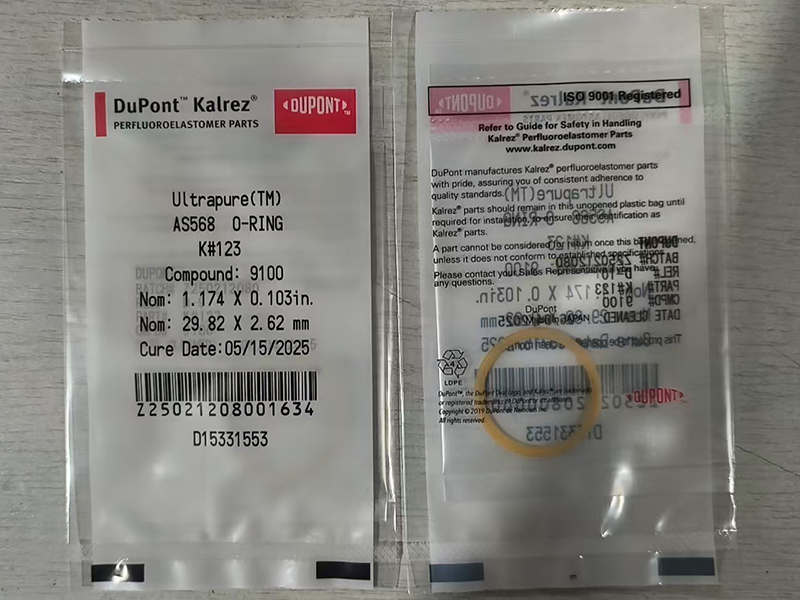
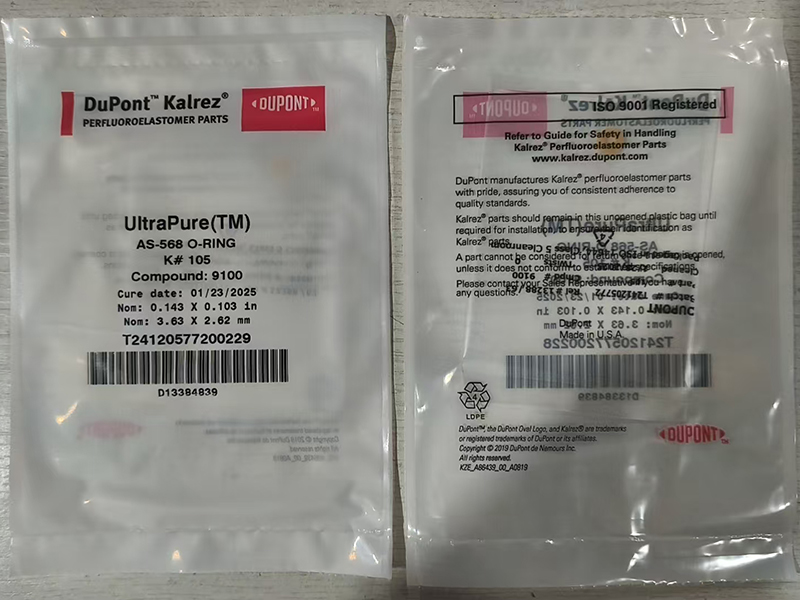
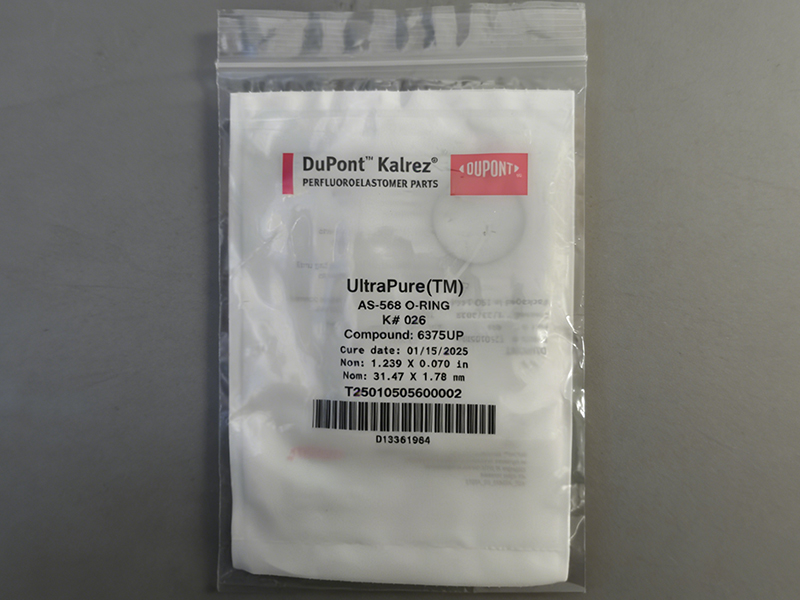
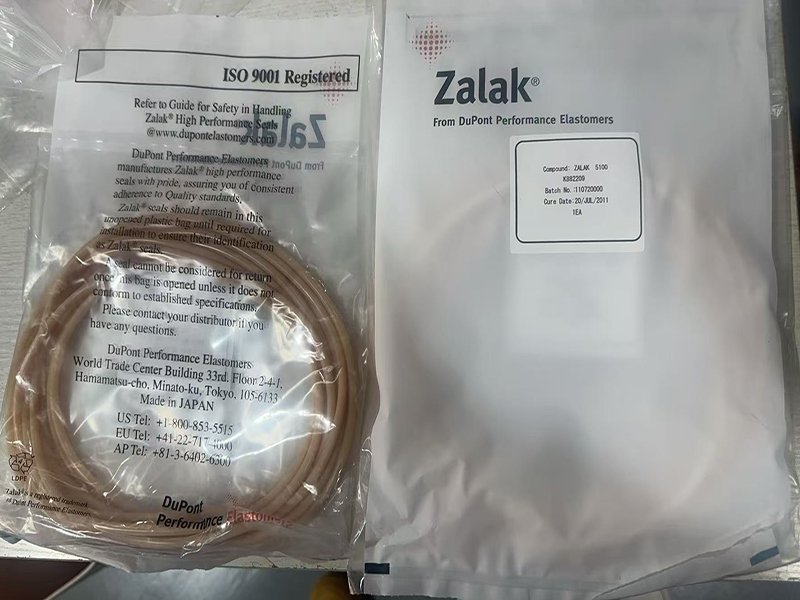
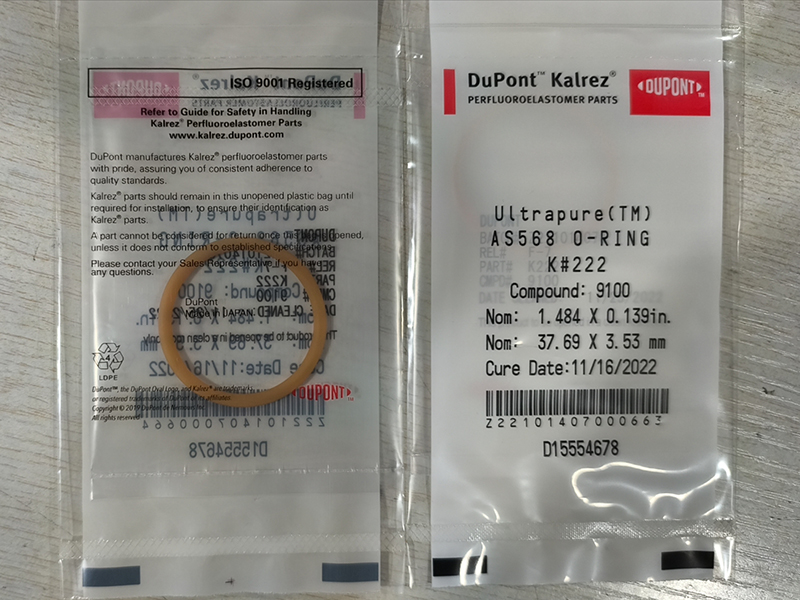
In industrial production, automobile manufacturing, and even daily life, leakage has always been an invisible pain point that threatens equipment safety and affects operational efficiency—oil leakage in hydraulic systems can lead to reduced power, gas leakage in pipelines may cause safety accidents, and even water seepage at the interface of household water heaters can be troublesome. The "key small component" to solve this problem is the rubber sealing ring. By filling gaps in equipment and forming a sealing barrier, it becomes the "invisible guardian" of equipment safety.
I. What is a Rubber Sealing Ring?
A rubber sealing ring is a mechanical sealing component with rubber as the core material, whose main function is to prevent fluids (liquids/gases) or solid media from leaking between equipment and components. Its working principle is simple: it uses the elasticity of rubber to fill gaps, ensuring reliable sealing even if the equipment has slight vibrations or deformations. From a few millimeters of pipe interfaces to several meters of industrial pump bodies, rubber sealing rings can be adapted.
II. Core Advantages of Rubber Sealing Rings: Why They Are the First Choice for Sealing?
Rubber sealing rings can become the "all-purpose solution in the sealing industry" due to their five core characteristics—each precisely matching the actual needs of users:
1. Strong Material Adaptability, Covering All-Scenario Needs
The material of rubber sealing rings can be flexibly selected according to environment, medium, and temperature, solving sealing pain points in different scenarios:
- Natural rubber: Good elasticity, low cost, suitable for general environments (-20℃~80℃), such as ordinary water pipes and door/window sealing strips;
- Silicone rubber: Resistant to high and low temperatures (-60℃~200℃), non-toxic and odorless, commonly used in medical equipment (infusion tubes) and food machinery;
- Fluororubber: Resistant to strong corrosion (acids, alkalis, oils) and high temperatures (up to 250℃), making it the "corrosion-resistant artifact" for chemical equipment and aerospace;
- Styrene-butadiene rubber: Wear-resistant and anti-aging, suitable for high-frequency friction scenarios such as automobile tires and industrial belts.
Whether you need "high and low temperature resistance" or "corrosion resistance", rubber sealing rings can find a corresponding material solution.
2. Flexible Shapes and Sizes, Adapting to All Equipment
The shape and size of rubber sealing rings can be completely customized, covering more than 90% of sealing scenarios:
- O-rings: The most versatile, with a circular cross-section suitable for static/mild dynamic sealing (e.g., pipe interfaces, valves);
- Rectangular rings: Strong extrusion resistance, suitable for high-pressure equipment (e.g., hydraulic cylinders, large pump bodies);
- V-rings: Multi-layer structure, suitable for dynamic sealing (e.g., reciprocating motion of pistons and piston rods);
- Special-shaped rings: Designed for special equipment (e.g., irregular engine block gaps).
From the waterproof ring of a watch to the sealing gasket of an industrial reactor, rubber sealing rings can "fit precisely".
3. Reliable Sealing Performance, Usable for Both Static and Dynamic Conditions
The elastic adaptability of rubber is its core advantage—it can fill gaps under pressure and maintain sealing even with slight equipment deformation:
- Static sealing: Such as pipe flange connections, where the rubber ring is compressed and fixed to prevent liquid leakage;
- Dynamic sealing: Such as piston rings in automobile engines, which can still seal fuel and engine oil when moving with the piston.
Compared with the "rigidity" of metal sealing, the "flexible sealing" of rubber sealing rings can better handle complex working conditions, reducing leakage rates by more than 80%.
4. Strong Durability, Reducing Maintenance Costs
The material of rubber sealing rings is optimized to resist three common types of wear: abrasion, aging, and corrosion:
- Wear resistance: For example, in the piston movement of hydraulic systems, the elastic buffer of rubber reduces friction;
- Aging resistance: Resistant to ultraviolet rays and ozone, sealing rings used in outdoor equipment can last for several years;
- Corrosion resistance: Materials such as fluororubber can work in acid-base environments for a long time without frequent replacement.
For example, fluororubber rings used for reactor sealing in chemical enterprises can be used continuously for 1-2 years, far longer than the service life of other sealing materials.
5. Easy Installation, Saving Time Costs
The installation of rubber sealing rings almost requires no special tools:
- O-rings: Directly snap into the sealing groove;
- Rectangular rings: Place flat and press tightly;
- Even complex special-shaped rings only need to be aligned and installed according to marks.
Compared with metal sealing, which requires welding and adjustment, the installation of rubber sealing rings can save 80% of the time, especially suitable for mass-produced equipment (e.g., automobile assembly lines).
III. Industry Applications of Rubber Sealing Rings: Small Components, Big Role
The application of rubber sealing rings covers all fields that require sealing, worthy of being called the "vascular sealant of industry":
- Automobile industry: Engine gaskets, hydraulic system seals, door sealing strips;
- Aerospace: Fuel pipes, hydraulic systems, cockpit seals;
- Industrial manufacturing: Core seals for pumps, valves, and compressors;
- Medical equipment: Aseptic seals for infusion tubes, syringes, and disinfection equipment;
- Construction industry: Seals for water pipes, heating pipes, and waterproof rolls;
- Daily life: Water heater interfaces, water dispenser seals, pressure cooker rubber rings.
IV. Conclusion: The Value of Rubber Sealing Rings
Although small, rubber sealing rings are the "basic components of modern industry"—through **material diversity, shape flexibility, and reliable sealing performance**, they solve leakage problems from households to industries. Choosing the right rubber sealing ring can not only avoid safety hazards caused by leakage but also improve equipment efficiency and reduce maintenance costs.
Whether for enterprise procurement or personal maintenance, understanding the characteristics of rubber sealing rings can help you find a more efficient sealing solution. Next time you encounter a leakage problem,first ask yourself: "What kind of rubber sealing ring do I need?"