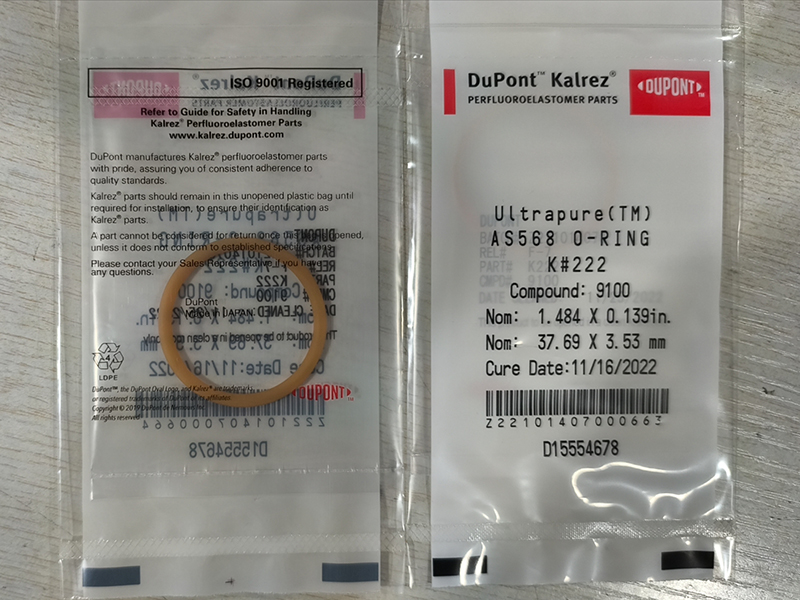
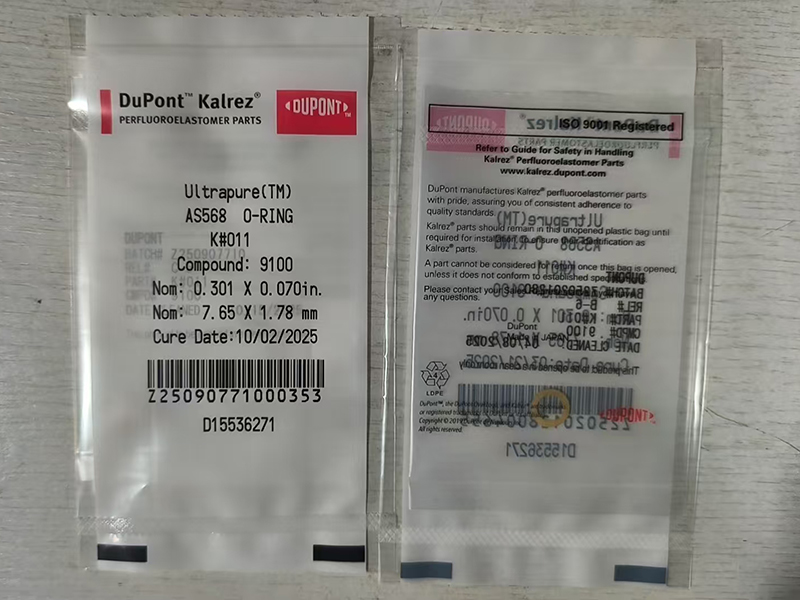
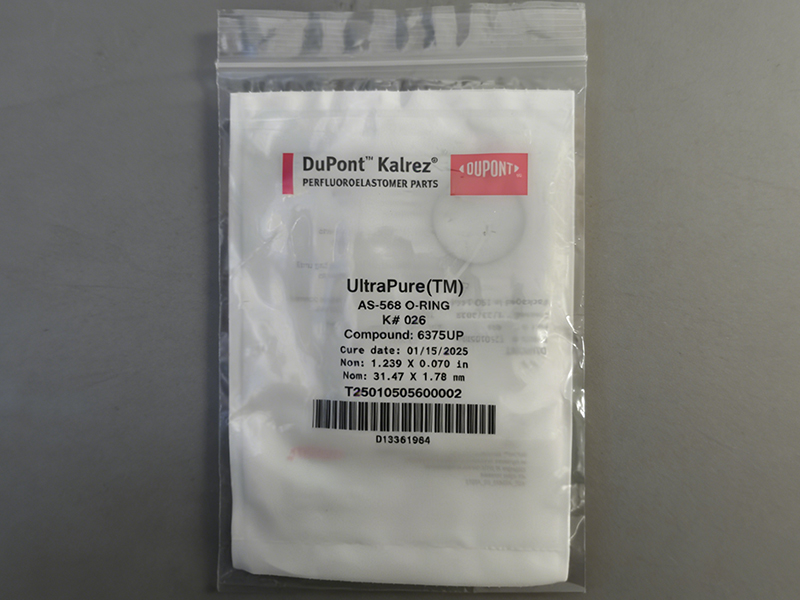
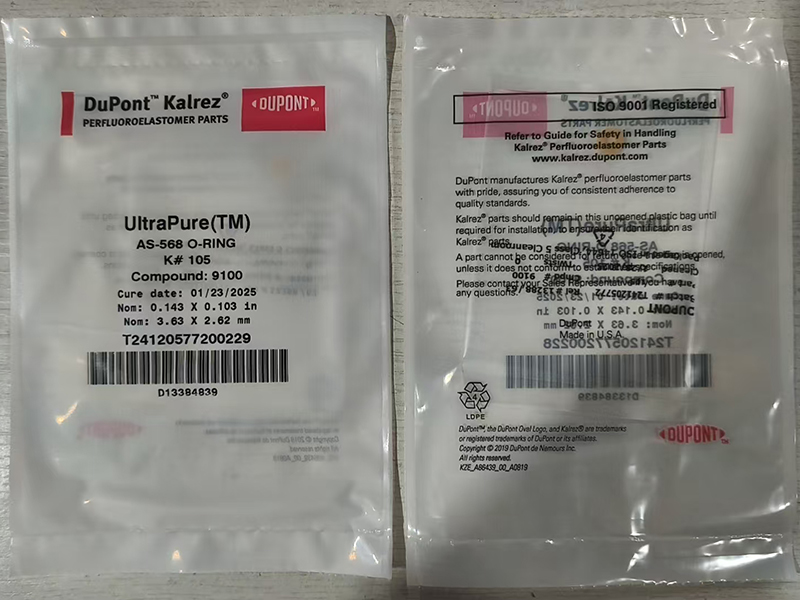
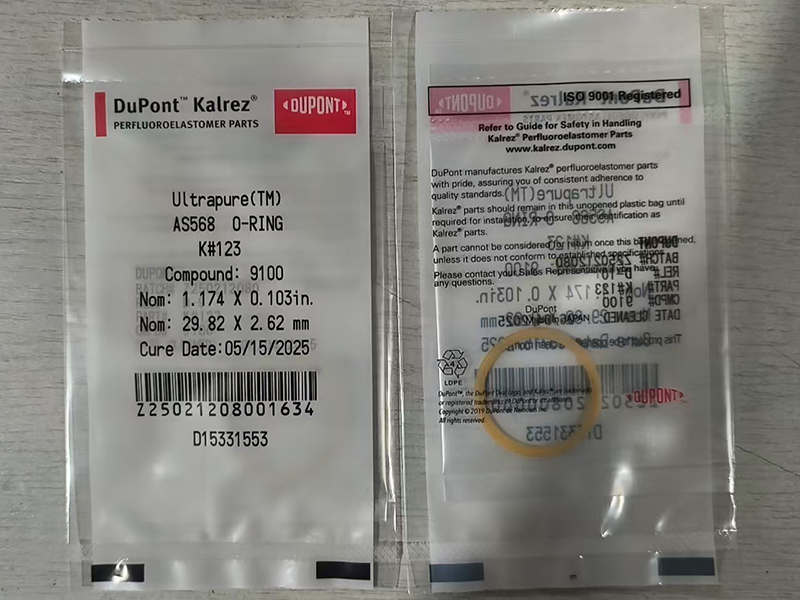
In industrial production and daily life, seals are key components that ensure equipment "does not leak water, air, or oil". O-rings (referred to as O-rings) have become one of the most widely used sealing solutions globally due to their advantages of "simple structure, reliable performance, and low cost". From factory hydraulic presses to household faucets, from car engines to water purifier filters, O-rings quietly play the role of "leak-proof guardians".
I. Basic Definition and Working Principle of O-Rings
An O-ring is a circular elastomeric seal made of elastic materials such as rubber, silicone, and fluororubber. Its working logic is simple: when installed between two mating surfaces (such as a shaft and a hole, or a lid and a container), its elasticity generates a "compressive force" that fills the tiny gaps between the surfaces, forming a tight "sealing barrier"—whether it is water, oil, gas, or other media, none can penetrate this barrier and leak.
This "elasticity for sealing" design gives O-rings the two major characteristics of "easy installation" and "high reliability", making them the "versatile player" in the field of seals.
II. Three Core Uses of O-Rings
The value of O-rings goes far beyond "leak prevention"; they play multiple roles in different scenarios:
1. Basic Sealing: Preventing Medium Leakage
Whether it is the oil pipe joints of hydraulic systems, the cylinders of pneumatic tools, or the water inlets of household washing machines, the core task of O-rings is to "block leaks". They can adapt to different pressure and temperature environments, ensuring that media (oil, water, gas, etc.) stay where they should be, avoiding equipment failures or resource waste caused by leakage.
2. Mechanical Protection: Reducing Wear and Corrosion
At the mating points of metal components (such as shafts and bearing seats), O-rings can form an "elastic buffer layer": on the one hand, reducing direct friction between metals and lowering wear; on the other hand, isolating water vapor, dust, or chemical media in the air to prevent components from being corroded and extend equipment service life.
3. Cushioning and Vibration Damping: Absorbing Impact Energy
For equipment with frequent vibration (such as water pumps, motors, and automobile engines), the elasticity of O-rings can "absorb" vibration energy, reducing the impact of vibration on connection parts. This not only reduces equipment operating noise but also prevents problems such as loose screws and component falling off, improving equipment stability.
III. How to Choose O-Ring Specifications?
Choosing the right specifications is crucial to ensuring O-ring performance. The core factors are the following 4 points:
1. Inner Diameter (ID): Matching the Size of the Installation Shaft/Hole
The inner diameter is the "internal diameter" of the O-ring and needs to precisely match the diameter of the shaft (or hole) you want to install. If the inner diameter is too large, the O-ring will be loose and unable to seal; if too small, it will be stretched and deformed, accelerating aging.
2. Outer Diameter (OD): Adapting to the Size of the Installation Groove
The outer diameter corresponds to the size of the "sealing groove" on the equipment—to ensure that the O-ring can be firmly stuck in the groove and will not be "squeezed out" due to excessive pressure, otherwise the sealing effect will be lost.
3. Thickness: Determining Compression and Pressure-Bearing Capacity
Thickness is the cross-sectional height of the O-ring, which directly affects the "compression amount" (i.e., the degree of being flattened after installation). Thicker O-rings are suitable for high-pressure scenarios (such as hydraulic systems), while thinner ones are suitable for precision equipment with limited space (such as medical instruments).
4. Material: Matching the Medium and Environment
Different materials of O-rings are suitable for different scenarios:
- Rubber: Cost-effective, suitable for general water and oil media (such as automobile oil pots);
- Silicone: Resistant to high and low temperatures (-50℃ to 200℃), suitable for high-temperature/low-temperature scenarios such as ovens and water heaters;
- Fluororubber: Resistant to chemical corrosion, suitable for strong corrosive environments such as chemical equipment and acid-base solution pipelines.
IV. Where to Buy O-Rings?
Choose the appropriate channel according to purchasing needs:
1. E-commerce platforms: Such as Taobao, JD.com, Amazon, etc., with a complete range of products and transparent prices, suitable for small-batch purchases (such as household maintenance) or trying new specifications.
2. Professional seal suppliers: Provide customization services and can recommend suitable O-rings according to your equipment parameters (such as medium, pressure, temperature), suitable for special scenarios (such as high-temperature, high-pressure equipment).
3. Industrial distributors: Facing corporate customers, providing bulk purchasing and technical support, suitable for regular maintenance and replacement of factory equipment.
V. O-Ring Installation Precautions
Improper installation is the main cause of O-ring failure. The following 3 points must be kept in mind:
1. Clean the Surface: Remove Dust and Oil Stains
Before installation, be sure to wipe the mating surfaces with a clean cloth or alcohol to ensure there is no dust, oil stains, or burrs—even tiny particles may scratch the O-ring, causing leakage.
2. Precise Sizing: Avoid the "Almost" Mentality
Do not choose O-rings based on "feel"; be sure to measure the shaft/hole diameter and groove size, and select the corresponding model according to the specification table. Even a 1mm dimensional error may lead to seal failure.
3. Correct Installation: Avoid Stretching and Damage
- Do not use sharp tools such as screwdrivers or pliers during installation; push gently into the groove with bare hands or soft tools (such as a rubber hammer);
- For shaft installation, apply a small amount of grease (such as Vaseline) to the shaft surface to reduce friction and avoid the O-ring being strained;
- Do not over-compress the O-ring—the compression amount is generally controlled at **15%-30%** (i.e., the thickness is flattened by 15%-30%), as excessive compression will accelerate aging.
Summary: The "Small Size, Big Role" of O-Rings
Although O-rings seem simple, they bear the "safety bottom line" of equipment operation. Whether it is selecting specifications, purchasing channels, or installation operations, every step affects their performance and service life. Understanding this knowledge can help you select and use O-rings correctly, making equipment more reliable and longer-lasting.
If you encounter problems in installation, it is recommended to consult a professional seal supplier—they can provide more accurate solutions according to your specific scenario.