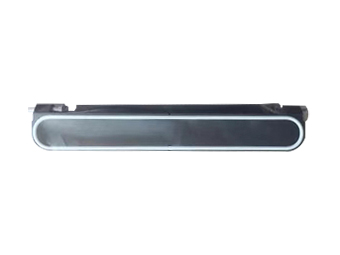
Slit Valve: Key Control Component In Vacuum Systems And Application Analysis
Release time:2026-06-01
Visits:186
In scientific research and industrial production scenarios requiring a high vacuum environment, the slit valve is a core component that is invisible but indispensable. By precisely controlling gas flow, it provides crucial support for the stable operation of vacuum systems and ensures process accuracy, serving as a fundamental tool for achieving ultimate environmental control in numerous high-demand fields.
I. What is a Slit Valve? Core Structure and Design Logic
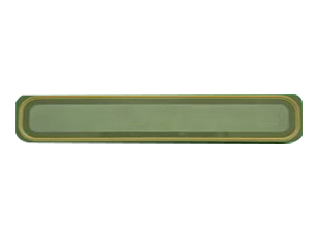
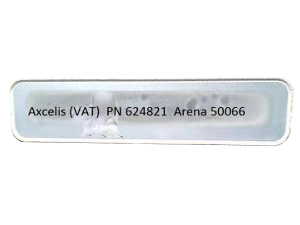
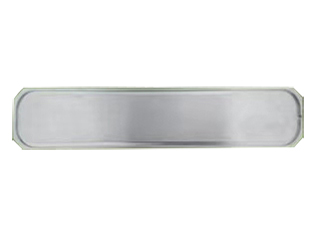
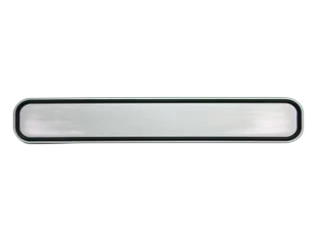
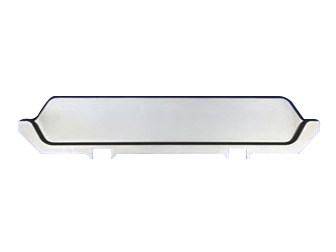
A slit valve is a specialized valve designed for vacuum systems, its core structure consisting of two parallel metal plates (commonly referred to as slit plates) with an extremely small gap between them. This gap is small enough to restrict the passage of gas molecules, thereby enabling precise regulation of the vacuum environment.
To meet the requirements of different scenarios, the material of the slit plates is not fixed: in addition to common metals, materials such as ceramics and glass, which are (high-temperature resistant) and corrosion-resistant, are also used to ensure stable performance under complex working conditions.
II. Working Principle of Slit Valve: Control to Safeguard Vacuum
The core advantage of the slit valve lies in its gentle and precise control logic:
By adjusting the internal pressure of the valve, the opening speed of the valve plate is precisely controlled—allowing the plate to first make gentle contact with the sealing surface at a slow speed, then quickly compress the sealing surface. This design directly addresses two major pain points of traditional valves: first, it prevents damage to the sealing surface due to excessive impact force of the valve plate (extending valve life); second, it avoids (particles) generated by chamber vibration, preventing contamination of the process environment.
In simple terms, the working principle of the slit valve revolves around (smoothness): using the method of slow contact + fast sealing, it ensures both the airtightness of the vacuum and the stability of the system.
III. Key Applications of Slit Valves: Wide-ranging Scenarios from Scientific Research to Industry
The value of slit valves lies in their ability to meet the core requirements of high vacuum, low interference, and zero pollution, thus being widely used in multiple fields with extreme environmental demands:
1. Particle Physics and Accelerator Experiments: Vacuum Guardian for Stable Particle Beams
In accelerators or particle physics experiments, the transmission efficiency of particle beams directly depends on the purity of the vacuum environment—if there are too many gas molecules, the particle beam will deviate from its orbit due to collisions, leading to experimental data errors. Slit valves strictly control the vacuum level, reducing interactions between particles and gas, ensuring stable transmission of particle beams, and serving as an important guarantee for the accuracy of experimental data.
2. Semiconductor Manufacturing: Clean Barrier for Chip Processes
Steps such as deposition, etching, and cleaning in semiconductor production have extremely stringent requirements for environmental cleanliness—even tiny particles can cause chip failure. Slit valves maintain a high vacuum state in the chamber by restricting gas backflow, providing a zero-pollution working environment for semiconductor processes, while ensuring precise control of etching, deposition, and other steps, thus serving as a key support for chip yield.
3. Vacuum Pump Systems: Auxiliary Core for Enhancing Vacuum Level
At the outlet of molecular pumps or diffusion pumps, slit valves act as anti-backflow devices: they can effectively block the backflow of external gas, further improving the vacuum level of the entire vacuum pump system, while reducing the pump's workload and extending its service life.
4. Optics and Spectroscopy: Environmental Guarantee for Precise Beam Control
In optical or spectroscopic research, the transmission path of light beams must not be interfered with by gas (gas molecules can cause light scattering or absorption). Slit valves eliminate gas effects on light beams by stabilizing the vacuum environment, helping researchers obtain clearer and more accurate spectral data, which is the foundation for high-quality experimental results.
5. Vacuum Electronics: Path Controller for Electron Beam Processing
In the manufacturing of electronic devices (such as chips and electron microscopes), the focusing and transmission of electron beams require an interference-free vacuum environment. Slit valves control the gas concentration in the electron beam path, ensuring that the electron beam can accurately reach the target position, thus serving as a key guarantee for electron beam processing and imaging accuracy.
6. Space Simulation and Vacuum Testing: Tool for Replicating Space Environments
In space simulation experiments, it is necessary to simulate the vacuum conditions that spacecraft encounter in space (such as performance testing of satellite components). Slit valves can maintain a high vacuum state in the test chamber, accurately replicating the space environment, and helping to test the reliability of components under extreme conditions—from spacecraft parts to satellite sensors, all need to verify their performance through the environmental simulation of slit valves.
Conclusion: Slit Valve – Invisible Cornerstone of Vacuum Systems
From cutting-edge exploration in particle physics to precision manufacturing of semiconductor chips, and to the research and development of space technology,
slit valves have always played the role of regulator of vacuum environments behind the scenes. Its value does not lie in complexity but in precision—using a simple structure to solve the core needs of stability, cleanliness, and efficiency in vacuum systems.
For fields requiring high vacuum, slit valves are not an optional component but a must-have component—with their own design advantages, they provide reliable solutions for every scenario with requirements for ultimate environments.