Vacuum Valve Selection And Application Guide: From Basic Cognition To High-Reliability Solutions
Release time:2026-04-27
Visits:226
In fields such as semiconductor manufacturing, medical diagnostic equipment, and scientific instruments, where precision, cleanliness, and reliability are extremely demanding, the stable operation of vacuum systems directly determines product quality and experimental results. As the control center of vacuum systems, vacuum valves are the core components that regulate gas flow direction, control gas flow rate, and ensure the vacuum environment—their performance and adaptability are the lifeline of vacuum systems.
I. Core Functions of Vacuum Valves: Why Are They the Brain of Vacuum Systems?
The role of vacuum valves is essentially to enable the vacuum system to operate on demand, which can be divided into three core functions:
1. Gas Path Control: Like the switch and steering wheel of the vacuum system, it can accurately cut off or connect pipelines and flexibly change the flow path of gas to ensure that gas flows according to process requirements;
2. Vacuum Degree Regulation: Maintain a stable vacuum environment required by the system by controlling the gas flow rate—this is crucial for scenarios such as semiconductor lithography and gene sequencing that require constant vacuum;
3. Quantitative Gas Filling: Precisely control the gas filling amount in processes that require supplementary specific gases (such as vacuum coating) to avoid affecting the final result due to excessive or insufficient gas.
II. Common Types of Vacuum Valves: Choosing on Demand is the Key
Different application scenarios have vastly different performance requirements for valves. According to functions and structures, vacuum valves are mainly divided into the following categories:
- Vacuum Control Valves: Focus on precise adjustment, suitable for scenarios that require continuous control of gas flow (such as vacuum drying equipment);
- Vacuum Isolation Valves: The core is complete cut-off to prevent reverse gas flow from polluting the system, commonly used in production lines that need frequent gas path switching;
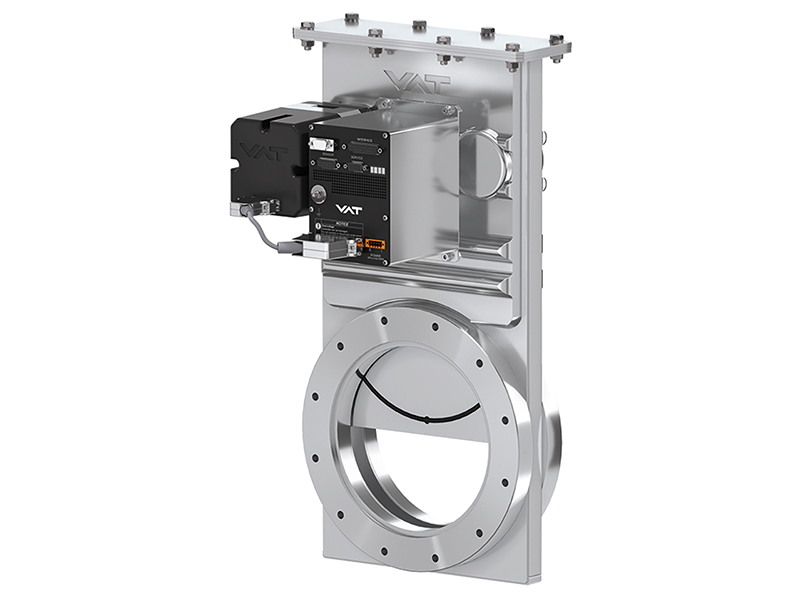
- Vacuum Gate Valves: Suitable for large-diameter pipelines, can be opened/closed quickly, and are mostly used for main gas path control in semiconductor manufacturing;
- All-Metal Vacuum Valves: Adopt metal sealing structure, high temperature resistance and corrosion resistance, suitable for extreme environments (such as high-temperature vacuum furnaces).
Each type of valve is designed to solve specific problems—for example, butterfly vacuum valves are compact and suitable for scenarios with limited installation space; pendulum vacuum valves maintain high tightness during high-frequency switching, suitable for industrial scenarios with continuous production.
III. Vacuum Valve Selection: Two Core Factors Determine Adaptability
Choosing the right vacuum valve is equivalent to laying the foundation for the vacuum system. Two key points should be focused on during selection:
1. Working Pressure: Matching Vacuum Degree Requirements
Vacuum environments are divided into low vacuum, high vacuum, ultra-high vacuum (and even extreme ultra-high vacuum), and different pressure levels correspond to different valve designs:
- Low vacuum (such as general industrial vacuum packaging): Valves with conventional sealing structures can be selected;
- High vacuum/ultra-high vacuum (such as semiconductor lithography, scientific experiments): Valves with no leakage design are required—these valves usually use metal seals or special polymer materials and can maintain sealing at a vacuum degree below 10⁻⁷Pa.
2. Structure and Installation: Fitting Pipeline Layout
The structure of the valve needs to seamlessly connect with the pipeline:
- Is the pipeline in a straight layout? Choose a baffle valve or gate valve to avoid leakage risks caused by additional pipe fittings;
- Does the pipeline have a corner? Choose an angle valve to directly adapt to 90° installation and reduce gas flow resistance;
- Is the installation space limited? Choose a butterfly or micro valve to save space without sacrificing performance.
IV. Vacuum Valve Installation and Use: 3 Precautions to Ensure Long-Term Stability
Choosing the right valve is only the first step; correct installation and maintenance can extend its service life:
1. Read the manual before installation: Confirm the inlet and outlet directions of the valve (many valves have flow direction indicators, and reverse installation will cause seal failure);
2. Ensure tightness during installation: Use a torque wrench to evenly tighten flange bolts to avoid hidden leakage caused by uneven force;
3. Regular daily maintenance: Regularly check seals (such as O-rings, metal sealing surfaces)—if aging or scratches are found, replace them in time to prevent vacuum degree reduction.
V. VAT Vacuum Valves: Reliable Solutions for High-Demand Scenarios
When application scenarios have extreme requirements for cleanliness, precision, and durability, professional vacuum solutions become crucial. As a leading global vacuum provider, the core advantage of VAT vacuum valves lies in full-process adaptability from design to production:
- Cleanroom Production: All products are manufactured in Class 100 cleanrooms, eliminating particle contamination from the source—which is crucial for zero impurity scenarios such as semiconductor and display production;
- Tailor-Made Customization: Adjust designs according to application scenarios, such as optimizing the sealing structure for ultra-high vacuum experiments and enhancing the switching life of valves for high-frequency production;
- Durability in Extreme Conditions: Even in high-frequency switching, extreme temperatures from -200°C to 500°C, or ultra-high vacuum of 10⁻¹⁰Pa, VAT valves can still maintain precise control—which is the guarantee for zero error in industrial continuous production and scientific experiments.
Conclusion: Vacuum Valves Are Not Just Components but System Insurance
From the lithography of semiconductor wafers to the vacuum chambers of medical imaging equipment, every precise action of vacuum valves is safeguarding the stability of the system. Whether it is on-demand matching during selection or regular maintenance during use, every step is related to the final result. Solutions like VAT that focus on high reliability are designed for scenarios with strict requirements for zero error—choosing the right vacuum valve is essentially buying peace of mind for the long-term operation of the vacuum system.
This article has a clear structure, with the core keyword
vacuum valve naturally distributed in the title, introduction, sections, and conclusion, while covering long-tail keywords such as vacuum valve selection, vacuum valve installation, and vacuum valve application, meeting Google SEO requirements for content relevance and user intent matching; the content gradually deepens from basic cognition to selection, use, and high-reliability solutions, satisfying both beginners' entry needs and professional users' questions of what to choose and how to use, enhancing the practicality and authority of the article.