What Is Semiconductor Equipment? A Comprehensive Analysis Of Its Classification, Functions, And Market Development
Release time:2026-04-24
Visits:290
In the entire semiconductor industry chain from design drawings to finished chips, semiconductor equipment is the invisible cornerstone that supports the implementation of each process step. It not only determines the precision of wafer manufacturing and the efficiency of packaging and testing, but also directly affects the performance, quality of final semiconductor devices, and even the production capacity boundary of the industry. From small 5G chips in mobile phones to server processors in data centers, the birth of all chips relies on the precise operation of semiconductor equipment.
I. Semiconductor Equipment: The Core Manufacturing Engine of the Semiconductor Industry
In simple terms,
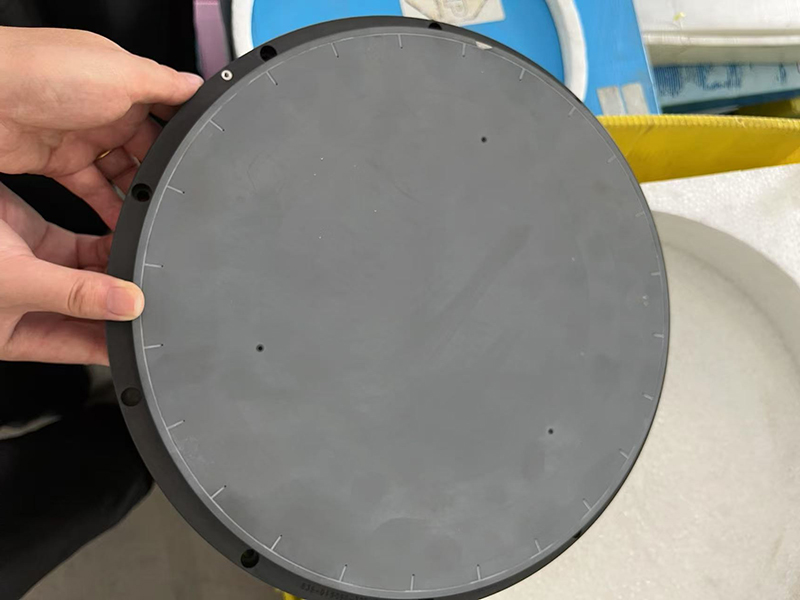
semiconductor equipment refers to specialized equipment used throughout the entire semiconductor manufacturing, packaging, and testing processes. If chip production is compared to cooking a gourmet meal, then semiconductor equipment is the wok, oven, and measuring scale. From silicon wafer cleaning, lithography (equivalent to preparing ingredients), to wafer etching, deposition (cooking), and then to chip packaging and testing (plating and quality inspection), each step requires corresponding equipment to perform high-precision operations. Without semiconductor equipment, even the most advanced chip designs cannot be transformed into physical products.
II. Four Major Classifications of Semiconductor Equipment: Covering the Entire Process from Wafer to Device
The classification of semiconductor equipment directly corresponds to the core links of chip production and can be mainly divided into four categories, each undertaking a unique process mission:
1. Wafer Manufacturing Equipment: The Precision Barrier from Silicon Wafer to Wafer
This is the most technologically challenging link in semiconductor production. To transform a bare silicon wafer into a wafer with complex circuits, steps such as lithography, etching, thin film deposition, and ion implantation are required. Wafer manufacturing equipment is the executor of these steps:
- Lithography machines are responsible for projecting the designed circuit patterns onto the silicon wafer (equivalent to drawing circuit diagrams);
- Etching machines carve circuit textures according to the patterns (equivalent to seal carving);
- Thin film deposition equipment forms insulating or conductive layers on the silicon wafer surface (equivalent to laying the foundation).
The precision of these equipment directly determines the density of transistors on the wafer (e.g., the key to 7nm and 5nm chips lies here).
2. Packaging Equipment: The Final Step to Turn Wafers into Usable Chips
After the wafer completes circuit processing, packaging equipment is needed to cut it into small pieces (bare chips), then perform bonding and plastic packaging, and finally transform it into finished chips that can be soldered onto circuit boards (such as SoCs in mobile phones and CPUs in computers). The role of packaging equipment is equivalent to putting a coat on the chip—it determines the chip's volume (such as small size and high integration of mobile phone chips), heat dissipation capacity (such as large package heat sinks of server chips), and reliability.
3. Testing Equipment: The Ultimate Gatekeeper of Semiconductor Quality
From in-process inspection during wafer manufacturing (such as checking if lithography patterns are clear) to final testing after packaging (such as testing the electrical performance and stability of chips), testing equipment is the piercing eye for screening unqualified products. It uses sensors, algorithms, and other technologies to ensure that chips flowing to the market meet specifications—for example, the high temperature resistance and low power consumption indicators of mobile phone chips need to be verified by testing equipment.
4. Other Auxiliary Equipment: The Support System Behind the Scenes
Although not directly involved in chip manufacturing, these equipment are the invisible guarantee for the entire process:
- Chemical supply systems ensure the purity of raw materials such as photoresist and etching solution (impurities can cause chip scrapping);
- Vacuum systems maintain the dust-free requirements of the manufacturing environment (tiny dust can damage nanoscale circuits);
- Water treatment systems handle wastewater and waste gas during production (in line with environmental protection standards).
These behind-the-scenes equipment may seem, but they directly affect the stability and sustainability of production.
III. Current Status of the Semiconductor Equipment Market: Pattern Characteristics Under Technical Barriers
The semiconductor equipment market is a typical high-threshold, high-concentration market:
- Technically, equipment research and development needs to cross multi-disciplinary barriers such as materials science, precision machinery, optics, and electronics, with a research and development cycle often lasting 5-10 years;
- In the market, downstream customers (such as wafer fabs and packaging and testing factories) have extremely high requirements for equipment reliability, compatibility, and after-sales service. Therefore, it has long been dominated by a few multinational enterprises with profound technical accumulation. They have formed a positive cycle of technical advantages → market share → re-research and development through continuous R&D investment.
IV. Future Trends: Emerging Technologies and Regional Layouts Driving Growth
With the popularization of technologies such as 5G, artificial intelligence (AI), and the Internet of Things (IoT), the market demand for high-performance chips is experiencing explosive growth:
- AI chips require higher transistor density (relying on the precision improvement of wafer manufacturing equipment);
- IoT devices require lower-power chips (relying on the refined design of packaging equipment);
- Autonomous driving chips require higher reliability (relying on stricter verification by testing equipment).
At the same time, the regional layout of the global semiconductor industry is changing. Emerging markets such as China are promoting the R&D and industrialization of local equipment enterprises through policy support and capital investment. This change will not only break the traditional market pattern but also inject new growth momentum into the global semiconductor equipment market.
Conclusion: Semiconductor Equipment—the Bridge Connecting Technology and Applications
From smart phones to autonomous driving, from cloud computing to quantum computing, all application scenarios that rely on chips essentially depend on the progress of semiconductor equipment. For the semiconductor industry, the iteration speed of equipment is both a barometer of technological innovation and a paving stone for future application expansion. As emerging technologies continue to increase requirements for chip performance, semiconductor equipment will continue to play the role of industry engine, driving the global semiconductor industry to evolve towards higher precision, higher efficiency, and more sustainability.
For those who want to understand the semiconductor industry, understanding the role and classification of semiconductor equipment is the key to reading the from 0 to 1 process of chips—it is not only a technical issue but also the core logic of the industrial ecosystem.