DuPont Seals: A Comprehensive Analysis Of The Characteristics And Industrial Applications Of High-Performance Sealing Materials
Release time:2026-04-20
Visits:280
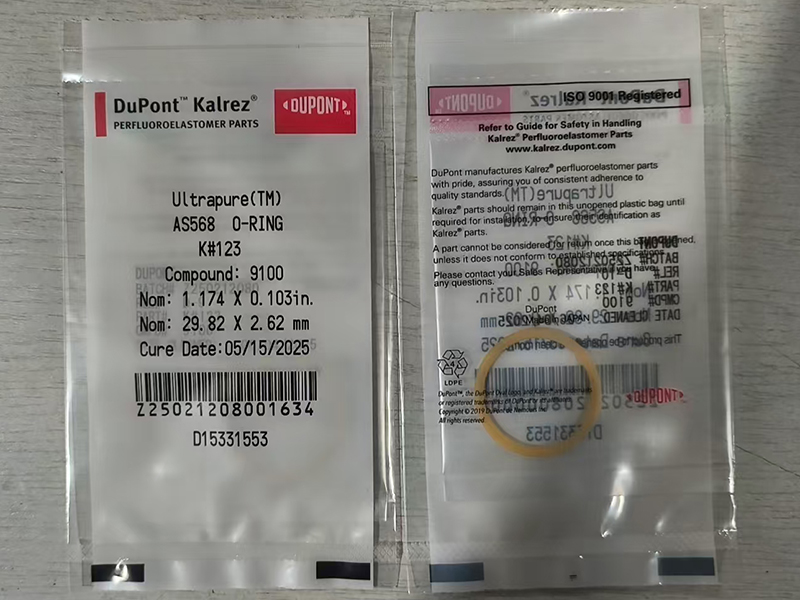
In industrial production, the reliability of sealing materials is the cornerstone of stable equipment operation—from preventing leaks at pipe joints to maintaining pressure in core units, seal failure can lead to shutdowns, leaks, or even safety accidents. As a representative product in the field of high-performance sealing, DuPont seals, with their multi-dimensional excellent characteristics, have become the preferred solution for solving sealing problems in numerous industries.
I. Core Characteristics of DuPont Seals: Comprehensive Coverage from Extreme Environments to Functional Requirements
The value of sealing materials lies in their ability to handle working conditions. The characteristics of DuPont seals are precisely designed around solving complex problems, covering the most common challenges in industrial scenarios:
1. Temperature Resistance: A Stable Performer Under Extreme High Temperatures
High temperature is the touchstone for sealing materials. Many ordinary seals deform and fail above 150°C, while DuPont seals can maintain structural stability in high-temperature environments up to 300°C. Whether in high-temperature pipelines of industrial furnaces or high-temperature compartments of automobile engines, they will not soften, crack, or fail due to excessive temperature, perfectly adapting to harsh working conditions with alternating hot and cold temperatures.
2. Chemical and Oil Resistance: A Shield Against Corrosion and Oil
In industrial environments, corrosive media such as acids, alkalis, and solvents, as well as oils like mineral oil and synthetic oil, are invisible killers of sealing materials. DuPont seals have excellent corrosion resistance to these substances—even with long-term exposure to strong acids and alkalis, they will not swell or age; at the same time, their oil resistance is superior among rubber sealing materials, capable of withstanding the long-term test of oil environments such as hydraulic systems and oil pumps.
3. Environmental Adaptability: An All-Rounder for Complex Working Conditions
In addition to temperature and chemical resistance, DuPont seals also excel in environmental toughness:
- Radiation Resistance: They can maintain performance in high-vacuum and high-radiation environments, suitable for fields with extremely high environmental requirements such as semiconductors and nuclear industry;
- Ozone Resistance: In scenarios with high ozone concentrations (such as outdoor electrical equipment), they will not crack or age;
- Atmospheric Aging Resistance: Long-term exposure to outdoor wind, sun, and rain does not cause performance degradation, eliminating the need for frequent replacement.
4. Mechanical and Electrical Insulation: Balancing Strength and Safety
Sealing materials must not only prevent leaks but also be durable. DuPont seals possess good mechanical properties, capable of withstanding high pressure and friction, making them suitable for high-speed rotating equipment such as pumps and valves; meanwhile, they have excellent electrical insulation performance, which can be used for sealing electrical equipment to avoid safety hazards caused by insulation failure.
II. Industrial Applications of DuPont Seals: Precise Adaptation from Basic Industry to High-End Fields
The advantage of performance ultimately needs to be implemented in industry demands. The application scenarios of DuPont seals cover multiple core industries, each solving pain points:
1. Petroleum Refining: Equipment Guardian in Harsh Environments
Core equipment such as pumps and valves in petroleum refineries are in long-term contact with high-temperature crude oil and corrosive desulfurizers. Seal failure can lead to leaks, shutdowns, or even fires. The high-temperature resistance and corrosion resistance of DuPont seals can effectively solve this problem—they can work continuously in high-temperature (150°C-300°C) and high-pressure environments, resist erosion by acidic media, ensure stable equipment operation, and reduce maintenance costs.
2. Automobile Manufacturing: Invisible Hero for Driving Safety
The engine, transmission system, and hydraulic/braking system of a car are the lifelines. Seal failure may cause dangers such as engine oil leakage and brake failure. The wear resistance and high-temperature resistance of DuPont seals perfectly adapt to the high-temperature environment of the engine compartment (above 120°C) and resist erosion by transmission oil—they will not thin due to long-term friction or deform due to high temperature, escorting the reliability of cars under working conditions such as high speed and climbing.
3. Food and Pharmaceutical: Compliance Choice for Sanitary Safety
The food and pharmaceutical industries have strict requirements for sealing materials: not only to prevent leaks but also to be non-toxic, odorless, and non-polluting to media. The corrosion resistance of DuPont seals can withstand erosion by acid-alkaline cleaning fluids (such as CIP cleaning in food factories), and their materials meet food-grade (FDA) and pharmaceutical-grade standards without releasing harmful substances. They are widely used in sealing fluid delivery pipelines, filling machines, and reactors to ensure products are not contaminated.
4. High-End Fields: Solutions for Harsh Working Conditions
In addition to basic industries, DuPont seals can also meet the needs of high-end fields such as semiconductors, aerospace, and nuclear industry:
- The high-vacuum environment in semiconductor workshops requires sealing materials to be radiation-resistant and non-volatile, and DuPont seals can avoid contaminating wafers;
- The extreme temperatures of aerospace equipment (from -50°C to 200°C), they can maintain sealing performance to ensure the safety of satellite and rocket components;
- The radiation environment of the nuclear industry, their radiation resistance can prevent material aging and ensure the operation of nuclear reactor auxiliary equipment.
III. Why Choose DuPont Seals? The Deep Logic from Performance to Value
For enterprises, the core demands for choosing sealing materials are stability and cost—DuPont seals exactly solve these two pain points:
- Reduce Shutdown Losses: Stable performance means fewer seal failures, avoiding production interruptions caused by shutdowns;
- Lower Maintenance Costs: The characteristics of aging resistance and wear resistance extend the replacement cycle of seals, reducing labor and material costs;
- Meet Industry Standards: Whether food-grade, pharmaceutical-grade, or industrial-grade, DuPont seals can meet the compliance requirements of different industries, avoiding penalties caused by non-compliant materials.
Conclusion: A Trusted Choice in the Industrial Sealing Field
From high-temperature refineries to precision semiconductor workshops, from automobile engines to food filling machines, the application scenarios of
DuPont seals span all working conditions from simple to harsh. Their value lies not only in being able to prevent leaks but more importantly in preventing leaks stably for a long time—this is the most precious certainty in industrial production.
For enterprises needing to solve sealing problems, DuPont seals are not an optional choice but the optimal choice—they build a safety line for equipment operation with multi-dimensional performance and provide guarantee for enterprises' production efficiency and cost control.
Whether dealing with extreme temperatures, corrosive media, or complex outdoor environments, DuPont seals can provide a one-stop solution—that is why they have become the benchmark product in the industrial sealing field.