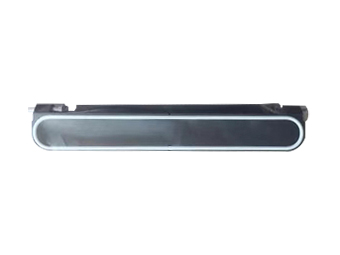
Slit Valve Door - Structural Principle And Core Characteristics
Release time:2026-01-23
Visits:451
The slit valve door is a special component for cavity isolation and on-off control in vacuum systems. Named for its adaptation to the rectangular "transfer slit" opening between the transfer cavity and the process cavity, it falls into the category of gate-driven isolation valves. With its compact structure and reliable sealing performance, it has become a key component of vacuum systems in high-end manufacturing and scientific research fields. Its core design is developed around the sealing and isolation requirements of vacuum environments, taking into account opening-closing response and cleanliness control, and is suitable for a variety of harsh working conditions.
In terms of working principle, the slit valve door realizes the on-off of the flow path through the linear movement of the gate plate, forming an isolation barrier between cavities. In the closed state, the gate plate is closely attached to the valve seat, and the gas flow is blocked by structural pressure and the characteristics of sealing parts to maintain the vacuum state inside the cavity. In the open state, the gate plate rises and falls vertically to the top of the valve cavity, making the flow path fully unobstructed and providing a channel for the transfer of workpieces such as wafers and substrates or gas circulation. Pneumatic, electric and other driving methods are supported, which can be selected according to the automation requirements of the system. Some models can achieve fast opening and closing actions to adapt to the operation rhythm of high-frequency working conditions.
The structural design of the slit valve door has distinct pertinence. The valve body is mostly made of corrosion-resistant materials such as stainless steel, which can resist the erosion of process media and the environment and extend the service life. The sealing structure is optimized and matched with special sealing parts to achieve low leakage performance, which can meet the air tightness requirements of high vacuum and ultra-high vacuum environments. To meet the cleanliness requirements, the product adopts a low particle generation design to reduce impurities generated by the movement and friction of the gate plate and avoid polluting the vacuum environment. At the same time, the overall structure is compact, and the installation depth is adapted to the space limitation of the slit opening, which can be seamlessly integrated into the interface position of the transfer cavity and the process cavity, taking into account the installation convenience and system compatibility.
The core characteristics are also reflected in the working condition adaptability. Some models support high-temperature vacuum baking working conditions, can withstand a certain range of temperature changes without affecting the sealing performance; all-metal sealed models can adapt to more harsh use environments and cope with the challenges brought by high pressure and temperature fluctuations. In addition, the valve has high stability during operation, and can still maintain the sealing effect and smooth movement after repeated opening and closing, reducing the frequency of maintenance.