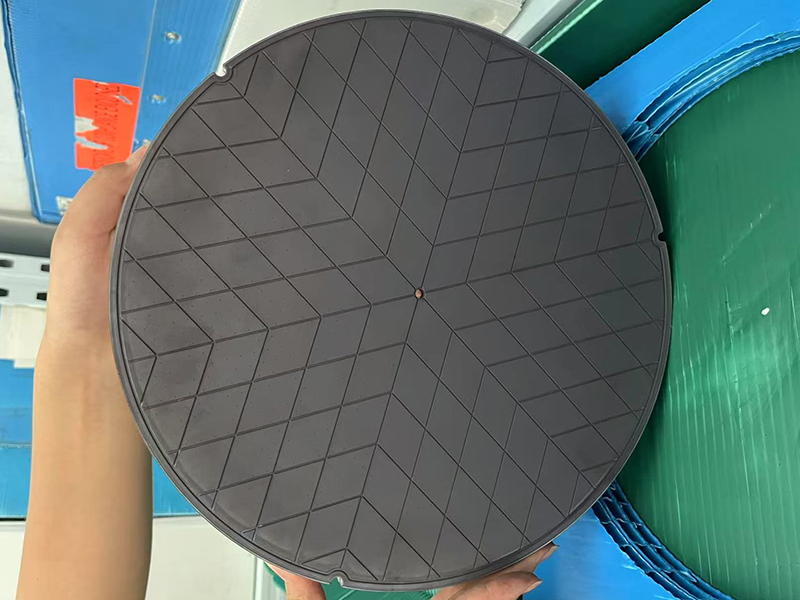
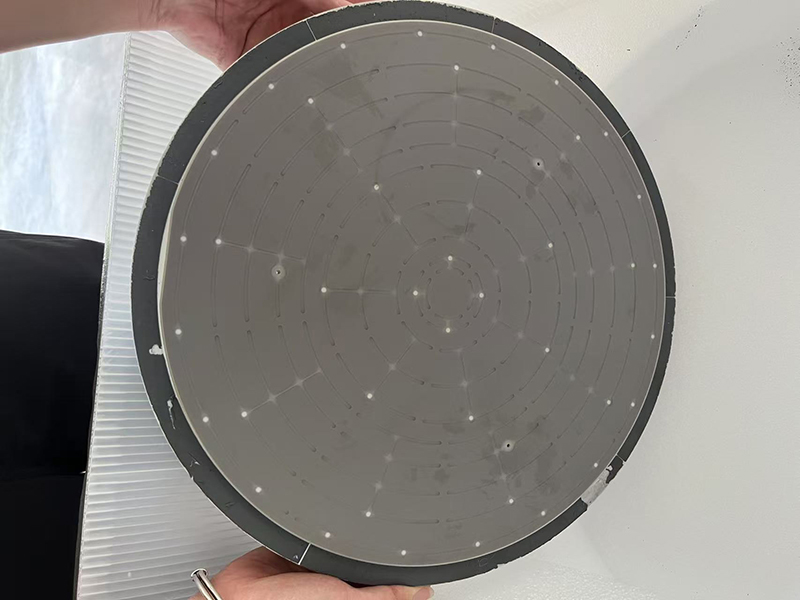
How To Improve The Stability And Safety Of ESC Electrostatic Chucks
Release time:2026-01-23
Visits:441
To enhance the stability and safety of ESC Electrostatic Chucks, a full-process guarantee system must be established from four dimensions: operation control, daily maintenance, structural optimization and environmental adaptation. This system ensures the sustained stability of adsorption performance, the safety protection of operations, workpieces and equipment, and avoids potential risks such as charge accumulation and material wear.
1. Precisely Control Operating Parameters to Consolidate the Core of Stability
Rational regulation of operating parameters is the foundation for maintaining adsorption stability and avoiding potential safety hazards, which must be set accurately in combination with adsorption mechanisms and process scenarios.
Precise Matching of Voltage Parameters
Set the rated voltage according to the chuck type (Coulomb force / J-R force) and strictly prohibit overvoltage operation — the Coulomb force type is controlled within 3000-4000V, and the J-R force type is limited to 500-800V to avoid dielectric layer breakdown and excessive charge accumulation. Equip with a voltage monitoring module to feed back voltage fluctuations in real time (allowable deviation ±5%), and automatically cut off the power when fluctuations exceed the limit to prevent abrupt changes in adsorption force or insulation failure.
Temperature Control and Pressure Balance
For chucks integrated with a helium cooling system, precisely adjust the backside helium pressure to ensure it is lower than the adsorption force threshold (usually a 20% safety margin is reserved), avoiding workpiece offset caused by gas pressure offsetting the adsorption force. Maintain the temperature uniformity of the chuck through a multi-zone temperature control module, and control the working temperature within the tolerance range of the dielectric layer (conventional -20℃~150℃). This prevents the decrease of dielectric layer resistivity and increase of leakage current due to high temperature, or slow charge migration caused by low temperature.
Standardize Adsorption/Release Procedures
Adopt a gradient voltage boost mode during adsorption to avoid electric field shock caused by sudden voltage rise; apply a reverse static elimination voltage (amplitude 50%-80% of the working voltage, duration 1-3s) first during release to completely eliminate residual charges and eliminate the risks of workpiece adhesion and electrostatic breakdown. For unipolar chucks, monitor plasma density synchronously to ensure effective charging of workpieces and avoid insecure adsorption.
2. Strengthen Daily Maintenance to Extend Service Life and Avoid Risks
Regular maintenance can reduce material wear, troubleshoot hidden dangers in a timely manner, and is the key to ensuring long-term stable operation.
Regular Inspection and Cleaning of the Dielectric Layer
Check the surface condition of the dielectric layer weekly, and inspect scratches, wear and plasma corrosion marks through an optical microscope. Replace the dielectric layer in a timely manner if there is damage or coating peeling to avoid electric field distortion; wipe gently with a lint-free cloth dipped in anhydrous ethanol for cleaning to remove surface particles and residual contaminants. Do not use hard tools for scraping to prevent damage to the insulation of the dielectric layer.
Maintenance of Electrode and Circuit Systems
Inspect electrode conductivity and tightness quarterly, troubleshoot electrode oxidation, poor contact and line aging problems, and replace damaged sealing rings and aged wires; calibrate voltage controllers and current monitoring modules regularly to ensure accurate parameter feedback and avoid misoperation caused by detection errors.
Residual Charge and Performance Calibration
Conduct adsorption force and residual charge tests monthly. If the adsorption force attenuation exceeds 30%, troubleshoot problems such as dielectric layer wear and voltage deviation; if the residual charge exceeds the standard, optimize static elimination parameters or overhaul the static elimination module. Record test data at the same time, establish a wear trend record, and predict faults in advance.
3. Optimize Structural and Adaptive Design to Improve Intrinsic Safety
Optimizing adaptability from the structural level can reduce the impact of external factors on stability and strengthen safety protection capabilities.
Structural Precision and Material Adaptation
Optimize the flatness (≤1μm) and parallelism (<5μm) of the adsorption surface according to process requirements to ensure uniform workpiece fitting and avoid local stress imbalance; select high-stability dielectric layer materials (such as aluminum nitride ceramics) and match with surface strengthening coatings (PECVD/PVD coatings) to improve plasma corrosion resistance and wear resistance, and extend service life.
Upgrading of Safety Protection Structures
Equip with overvoltage, overcurrent and leakage protection devices, which can quickly cut off the power and alarm when an abnormality is triggered; install workpiece offset monitoring sensors to feed back workpiece position in real time, and stop the machine immediately when offset occurs to prevent workpiece falling and equipment collision; optimize the sealing structure for vacuum working conditions to reduce the impact of gas leakage on adsorption force.
Optimization of Electrode and Adsorption Mechanism
Bipolar/multipolar electrode design can improve adsorption uniformity and reduce the dependence of unipolar chucks on plasma; interdigitated electrode arrangement can realize local adsorption force regulation, adapt to ultra-thin and brittle workpieces, and avoid workpiece damage caused by excessive stress; optimize electrode spacing at the same time to balance adsorption force and electric field stability.
4. Adapt to Working Conditions and Reduce External Interference
Stable control of working conditions can avoid performance fluctuations and safety risks caused by external factors.
Environmental Cleanliness and Humidity Control
Control the chuck operating environment to Class 10 cleanliness to reduce the barrier of dust and particles to the adsorption surface; maintain the humidity at 40%-60%. Excessively high humidity will reduce the insulation of the dielectric layer, and excessively low humidity is prone to electrostatic accumulation, both of which need to be regulated by a constant temperature and humidity system.
Adaptation to Vacuum and Plasma Environments
For ultra-high vacuum working conditions (10⁻⁵ Pa and below), select vacuum-resistant materials and test the vacuum tightness of the chuck in advance to avoid the impact of vacuum degree fluctuations on adsorption force; in plasma processes, optimize the distance and angle between the chuck and the plasma source to reduce the bombardment wear of the plasma on the dielectric layer, and configure a plasma shielding structure to protect the circuit system.
Equipment Collaborative Adaptation
Ensure the interface compatibility between the chuck and upstream and downstream equipment (transmission mechanism, temperature control system, process chamber) to avoid abnormal operation caused by integration deviations; debug equipment parameters synchronously to match the chuck's adsorption/release rhythm with the process flow and reduce the impact of mechanical shock on stability.
5. Standardize Operating Procedures and Strengthen Human Control
Standardized operation can avoid risks caused by human error and ensure operational consistency.
Pre-job Training and Operating Specifications
Conduct special training for operators to familiarize them with the chuck working principle, parameter setting and emergency handling procedures, and strictly prohibit illegal parameter adjustment and rough operation; formulate a standardized operating procedure (SOP), clarify the adsorption/release steps, cleaning process and fault troubleshooting methods to ensure unified operation.
Emergency Response Plan
Establish an equipment fault emergency mechanism, and formulate shutdown, troubleshooting and repair procedures for problems such as dielectric layer breakdown, workpiece offset and excessive residual charge; equip with emergency tools and spare parts to respond quickly when a fault occurs, reduce downtime, and avoid safety accidents caused by fault expansion.
◇◇ Related content ◇◇
- The Electrostatic Chuck (ESC): Precision Wafer Clamping, Thermal Management, And RF Coupling For Advanced Semiconductor Etch, PVD, And CVD Processes
- Pall-Style Filter Housings: Robust Engineering, Material Integrity, And Sanitary Design For Maximum Process Safety, Longevity, And Operator Protection In Critical Filtration Applications
- Premium PALL Filter Cartridges And High-Performance Replacements: Maximizing Filtration Efficiency, Dirt-Holding Capacity, And Contaminant Capture For Critical Fluid Management Applications
- Precision Gas Flow Meters And Mass Flow Controllers: The Ultimate Guide To Technology Selection, Calibration, And Application Optimization For Semiconductor, Pharmaceutical, And Research Processes
- Semiconductor Vacuum Pumps: A Comprehensive Guide To Dry Pump Technology, Abatement Integration, And Reliability Optimization For Wafer Fabrication
- Vacuum Butterfly Valves: The Complete Engineering Resource For High-Conductance Isolation And Control In Semiconductor, Research, And Industrial Vacuum Applications
- FKM (Fluorocarbon Rubber) Seals: The Definitive Engineering Guide To High-Performance Sealing For Automotive, Aerospace, Oil & Gas, And Industrial Applications
- FFKM (Perfluoroelastomer) Seals: The Definitive Guide To Conquering Extreme Temperatures, Aggressive Chemicals, And Critical Semiconductor, Oil & Gas, And Chemical Processing Applications
- The Complete Guide To O-Ring Seals: Design Theory, Material Selection, Gland Engineering, And Failure Analysis For Maximum Reliability