What Is A Vacuum Butterfly Valve? Detailed Explanation Of Working Principle And Industrial Applications
Release time:2026-05-11
Visits:270
In the pipeline systems of industrial fields such as chemical industry, building materials, and metallurgy, the control and shut-off of gas medium flow are core links to ensure production safety and improve operational efficiency. As a valve device specifically designed for gas media, the vacuum butterfly valve has become a key tool for precise control of gas flow in industrial scenarios, relying on its flexible adjustment performance and stable working condition adaptability.
I. What is a Vacuum Butterfly Valve? Core Positioning and Function
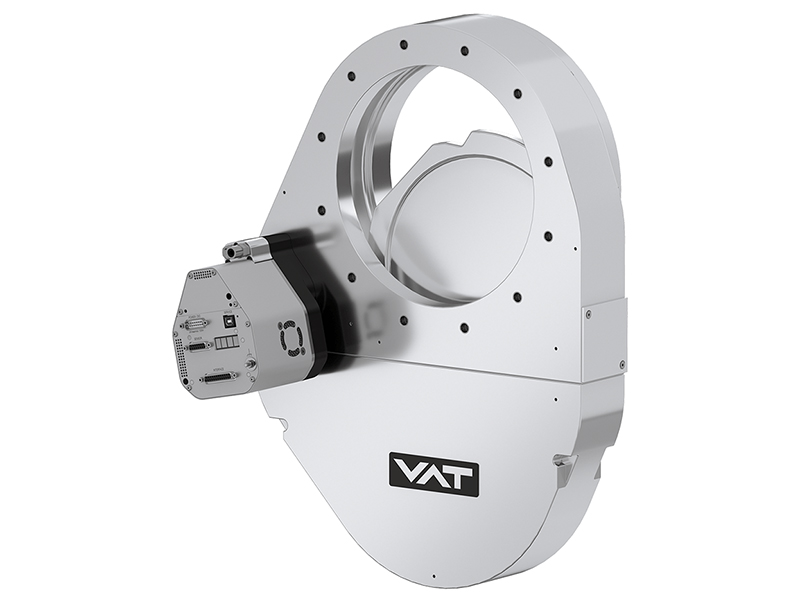
A vacuum butterfly valve is a valve device mainly targeting gas media, whose core function is to achieve precise regulation or complete shut-off of gas flow in pipelines. Different from ordinary valves, its structural design focuses more on meeting the requirements of vacuum or low-pressure gas environments, and can maintain stable operation under complex industrial working conditions (such as high temperature, dust, and corrosive gas). It is a type of valve specializing in gas control in industrial pipeline systems.
II. Working Principle of Vacuum Butterfly Valve: How to Achieve Flow Control?
The working logic of a vacuum butterfly valve is simple and efficient, mainly completing flow regulation through disc rotation:
The valve is driven by a motor to actuate the built-in actuator, which drives the disc inside the valve body to rotate freely within the range of 0-90°——
- When the disc is parallel to the pipeline axis (0°), the pipeline is completely unobstructed, and gas passes through without hindrance;
- When the disc is perpendicular to the pipeline axis (90°), the pipeline is completely closed, and the gas flow is completely cut off;
- If the disc stays at any angle between 0-90°, the gas flow can be linearly adjusted according to the rotation angle (the smaller the angle, the larger the flow; the larger the angle, the smaller the flow).
This rotary adjustment design enables the vacuum butterfly valve to have the characteristics of quick opening and closing, precise adjustment, and simple operation, making it very suitable for industrial scenarios that require frequent flow adjustments.
III. Industrial Application Scenarios of Vacuum Butterfly Valves: Which Industries Need Them?
The application range of vacuum butterfly valves covers almost all industrial fields that need to control gas media. The following are the most common scenarios:
1. Chemical Industry: Safe Control of Corrosive Gases
In chemical production, the transportation of corrosive media such as acid-base gases and organic volatile gases requires corrosion-resistant and leak-free valves. Vacuum butterfly valves can adapt to the characteristics of such media, ensuring the safe and reliable flow regulation or shut-off of gases such as sulfuric acid and chlorine.
2. Building Materials Industry: Emission Control of Dust and Waste Gas
In the production process of building materials such as cement, glass, and ceramics, a large amount of dust-containing waste gas is generated. Vacuum butterfly valves are often used in ventilation and dust removal systems to help enterprises achieve compliance with dust emission standards by adjusting the waste gas flow, while ensuring the air quality in the workshop.
3. Metallurgical Industry: Stable Regulation of High-Temperature Flue Gas
Blast furnaces and converters in metallurgical plants generate high-temperature flue gas (up to several hundred degrees Celsius). Vacuum butterfly valves can cope with high-temperature and high-dust working conditions, and are used to adjust the flue gas flow to ensure the temperature stability and energy utilization efficiency of the smelting process.
4. Power Industry: Airflow Control in Boilers and Desulfurization Systems
The boiler ventilation system of thermal power plants needs to precisely control the air input (to ensure combustion efficiency), and the flue gas desulfurization system needs to adjust the mixing ratio of desulfurizer and flue gas. Vacuum butterfly valves play a key role in stabilizing airflow in such scenarios.
5. Environmental Protection Engineering: Effective Treatment of Harmful Gases
In environmental protection projects such as waste gas treatment and air purification, vacuum butterfly valves are used to control the flow of industrial tail gas (such as VOCs and nitrogen oxides), ensuring that the waste gas is discharged up to standard after treatment, and serving as the flow gatekeeper in environmental protection pipeline systems.
Conclusion: The Precision Expert in Industrial Gas Control
The value of
vacuum butterfly valves lies in their specialization in precise control of gas media——whether it is a production link that requires fine flow adjustment or a safety scenario that must completely cut off the gas flow, they can rely on their simple principle and stable performance to become a reliable partner in industrial pipeline systems. For industries such as chemical industry, building materials, and metallurgy, choosing a suitable vacuum butterfly valve can not only improve production efficiency but also add a layer of protection for industrial safety and environmental compliance.
If you are looking for a solution for industrial gas flow control, the vacuum butterfly valve may be the targeted choice.