High Vacuum Diaphragm Valve: A Reliable Control Solution For High Vacuum Environments
Release time:2026-05-08
Visits:284
In industrial scenarios that require maintaining a high vacuum environment, such as vacuum coating, semiconductor manufacturing, and scientific research, the precise on-off control of gases directly affects process stability and product quality. At this point, a valve capable of stable operation under extremely low pressure becomes crucial—the high vacuum diaphragm valve is a specialized control device designed specifically for high vacuum environments, solving complex vacuum system requirements with a simple principle.
What is a High Vacuum Diaphragm Valve?
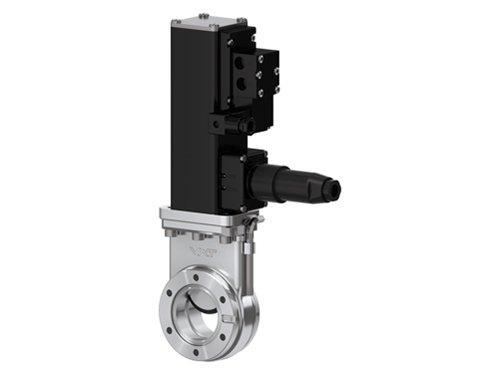
A
high vacuum diaphragm valve uses a diaphragm made of elastic material to cut off and connect the medium (gas or liquid). Unlike ordinary valves, its core design revolves around reliability in high vacuum environments: the diaphragm, as the core component for sealing and control, can completely isolate the medium under high vacuum conditions, ensuring precise control of gas flow without damaging the system's vacuum level. This design makes it a precise and reliable switch in high vacuum systems.
Core Advantages of High Vacuum Diaphragm Valves
Why can high vacuum diaphragm valves become the preferred choice for high vacuum environments? Their features directly address the pain points of industrial scenarios:
1. Compact Size, Adaptable to Space Constraints
Small size and simple structure are its significant advantages. Whether in the dense layout of semiconductor equipment or small laboratory vacuum devices, it can be easily installed without occupying excessive additional space, perfectly adapting to scenarios with limited space but high requirements.
2. Excellent Sealing, Maintaining Vacuum Integrity
The biggest concern in high vacuum environments is leakage—the elastic sealing design of the diaphragm can completely cut off medium flow, effectively maintaining the system's vacuum level. For processes like vacuum coating and semiconductor lithography where a tiny error can lead to huge mistakes, this is key to ensuring product quality.
3. Corrosion Resistance, Handling Complex Media
By selecting different diaphragm and lining materials, it can adapt to corrosive media such as acids and alkalis. When handling corrosive gases or liquids in the chemical industry, there is no need to worry about valve corrosion and failure, significantly reducing maintenance and replacement costs.
4. Easy Maintenance, Reducing Operational Burden
It abandons the stuffing box design of traditional valves, eliminating the need for frequent replacement of sealing packing; at the same time, the diaphragm compression mechanism can automatically adjust pressure, ensuring uniform pressure on the diaphragm and preventing leakage due to uneven sealing even after long-term use. This means less downtime for maintenance and more production time.
5. Long Service Life, High Cost-Effectiveness
The automatic adjustment design of the diaphragm not only improves sealing reliability but also extends service life—it can be switched tens of thousands of times while maintaining stable performance, saving enterprises the cost of frequent valve replacement and being suitable for long-term operating industrial systems.
Application Scenarios of High Vacuum Diaphragm Valves
From traditional industries to emerging sectors, the versatility of high vacuum diaphragm valves makes them indispensable in multiple fields:
- Vacuum Systems: In vacuum coating, semiconductor manufacturing, and laboratory vacuum equipment, it is the core component for controlling gas flow, ensuring the stability of the vacuum environment during the process;
- Chemical Industry: When handling corrosive media such as acids and alkalis, it can reliably cut off hazardous media, avoiding safety hazards caused by leakage;
- Food Industry: Its clean design and easy-to-clean characteristics meet hygiene requirements, suitable for scenarios requiring no residue such as vacuum packaging and food freeze-drying;
- Pharmaceutical Manufacturing: In aseptic processing, drug freeze-drying, and other links, the dead-corner-free structure prevents bacterial growth and ensures medium purity;
- Water Treatment: Controls water flow and prevents backflow, adapting to the vacuum systems of water treatment equipment;
- Emerging Industries: In new energy (such as lithium battery vacuum drying), aerospace (vacuum environment simulation), new material research and development, etc., it provides support for the vacuum control needs of high-end equipment.
Conclusion: A Reliable Partner for High Vacuum Systems
Whether in laboratory precision experiments or large-scale factory production lines, the control of high vacuum environments requires solutions that are stable, accurate, and long-lasting. High vacuum diaphragm valves, with their compact structure, excellent sealing, corrosion resistance, low maintenance costs, and long service life, have become a capable assistant in high vacuum systems.
From semiconductors to food and pharmaceuticals, from chemicals to aerospace, their versatility and reliability prove that in high vacuum environments, choosing a high vacuum diaphragm valve is choosing stable production guarantee. For enterprises pursuing high vacuum control precision, it is undoubtedly a trustworthy choice.