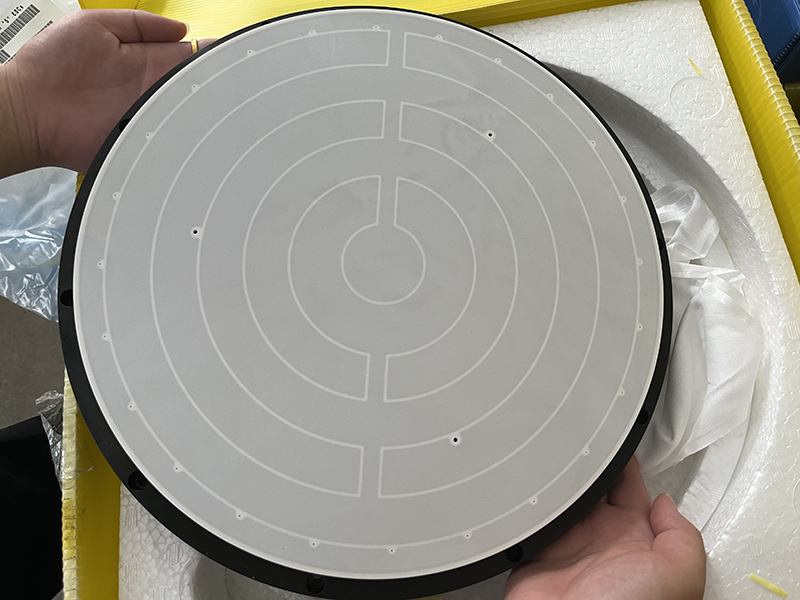
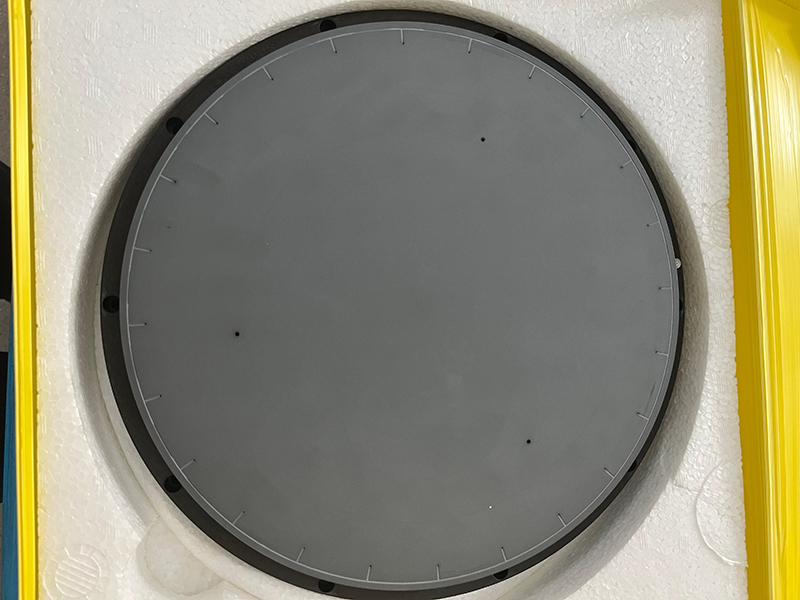
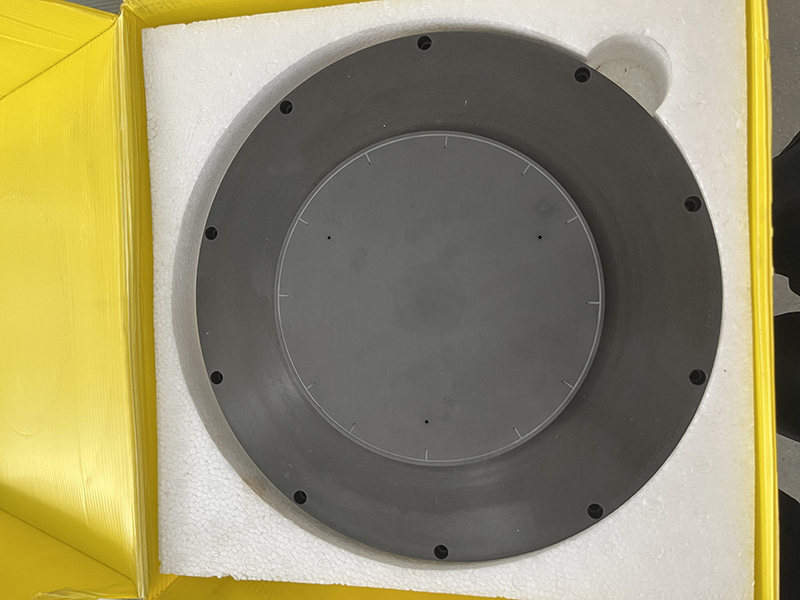
Types of Electrostatic Chucks
Electrostatic chucks vary based on electrode configuration, materials, and intended applications. The main types include:
1. Monopolar Electrostatic Chuck
Structure: Single electrode layer paired with a grounded plane.
Features: Requires an insulating medium such as helium or nitrogen gas between the chuck and wafer backside to enhance adhesion.
Applications: Suitable for high-impedance materials like silicon dioxide (SiO₂) and silicon nitride (Si₃N₄).
Advantages: Simpler design but dependent on backside gas for effective clamping.
2. Bipolar Electrostatic Chuck
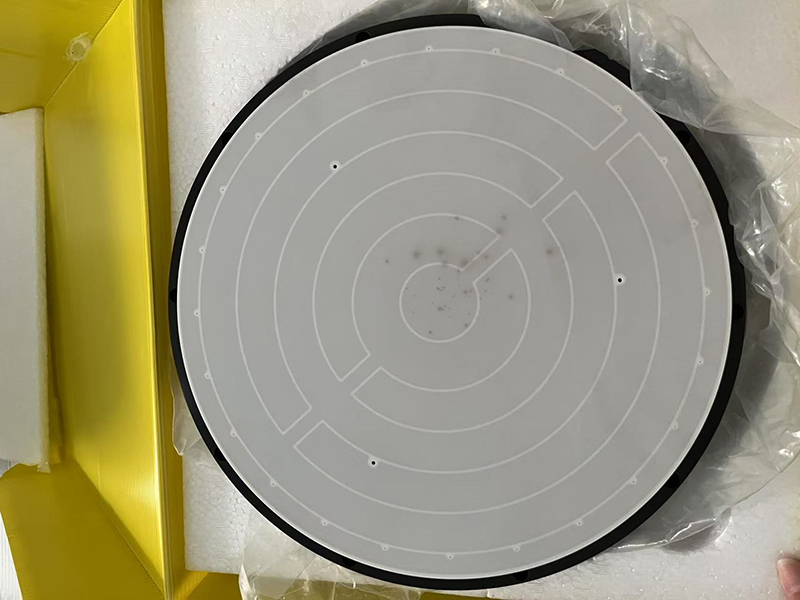
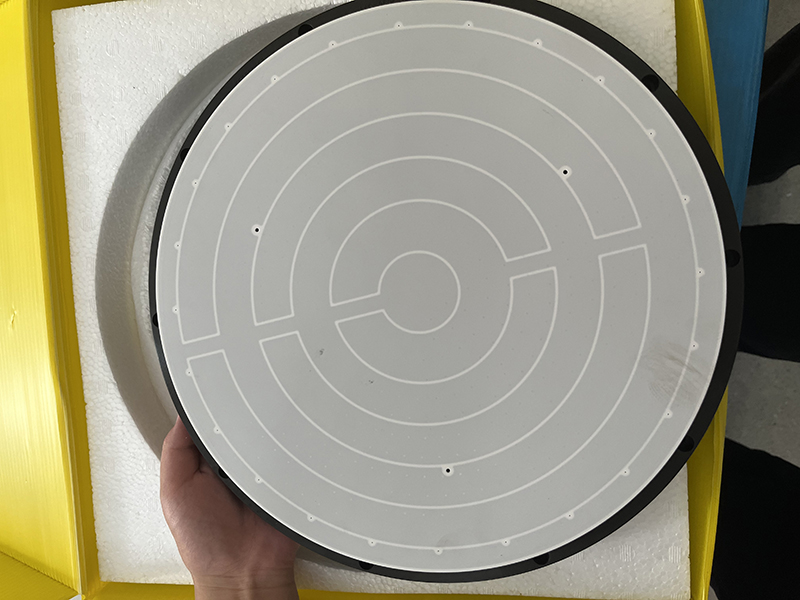
Structure: Two embedded electrodes with opposite polarities (positive and negative) inside ceramic or polymer layers.
Features: Functions without auxiliary gases, providing stronger and faster electrostatic force.
Applications: Ideal for conductive materials such as silicon wafers.
Advantages: Enhanced holding force and better response time; preferred in high-precision semiconductor processes.
3. Thermal-Controlled Electrostatic Chuck
Function: Combines electrostatic clamping with active temperature control, often using helium backside cooling.
Applications: Widely used in plasma etching and deposition processes where precise thermal management is critical.
Advantages: Maintains wafer temperature uniformity, preventing thermal deformation and ensuring process consistency.